


 中文简体
中文简体 English
 한국어
한국어 日本語
日本語 русский
 Español
 عربى
عربىIndustry News
Home / News / Industry News / Beef Bulgogi Recipe: Authentic Korean BBQ Marinade and Pro Cooking Tips

Sep 15, 2026
Content
On a quiet Sunday evening, nothing bridges the gap between comfort food and weekend theater quite like a tabletop grill loaded with thinly sliced, caramelized beef. Korean beef bulgogi, which translates to "fire meat," delivers exactly that experience in roughly 30 minutes of hands-on time. Because the marinade does most of the flavor work and the beef cooks in seconds, bulgogi is also one of the most forgiving Korean dishes for a home cook who has not yet assembled a full Korean pantry. The version of this beef bulgogi recipe you are about to read has been tested on multiple cooking surfaces, including the electric grill pans and smokeless grills produced by our own factory, so the instructions stay reliable whether you sear in a cast-iron skillet, on an electric grill pan, or over outdoor charcoal. We will start with the flavor principles, then build the marinade, choose the right cut, and finish with heat control so that every batch comes out glossy, charred, and tender.
Bulgogi is one of the most beloved dishes in Korean cuisine, and its name literally means "fire meat." The term refers to the traditional cooking method: thin slices of beef are marinated in a sweet and savory soy-based mixture, then quickly cooked over an open flame or on a hot metal surface. Unlike slow-braised Korean stews such as galbi-jjim, bulgogi is a fast-cooking dish that relies on intense heat and paper-thin slicing. Historians trace its origins to the Goguryeo period, when skewered beef was cooked over fire, but the modern soy-marinated version became widespread in the early twentieth century after Korean home cooks and restaurant chefs began blending soy sauce, sugar, garlic, and sesame oil into a signature sauce.
What separates an authentic beef bulgogi recipe from generic Asian stir-fry is the marinade's balance. Soy sauce brings salinity, sugar or honey adds caramel sweetness, Asian pear introduces natural enzymes that tenderize the meat, and toasted sesame oil contributes a nutty aroma. Garlic and green onion round out the savory backbone, while black pepper and optional gochujang add gentle heat. The result is a deeply seasoned beef that does not need heavy sauce at the table; it is already glossy, juicy, and packed with layers of flavor.
In modern Korean households, bulgogi is served on special occasions, family gatherings, and ordinary weeknight dinners alike. It also travels well into Korean barbecue restaurants, where customers cook the marinated slices on a dome-shaped grill at the center of the table. Outside Korea, bulgogi has become a global favorite because it is approachable, adaptable, and quick to prepare. The ingredients are available in most Western supermarkets, the cooking time is measured in minutes rather than hours, and the flavor profile appeals to both children and adults who enjoy sweet-savory combinations.
For home cooks, the single most important concept to understand is that bulgogi is a high-heat, short-cook dish. The marinade is not a tenderizer that can rescue a tough roast; it is a flavor layer that works together with thin slicing and fast searing. When you respect that principle, even a relatively economical cut like top sirloin can taste as luxurious as ribeye. This article will give you a complete masterclass in bulgogi, from ingredient selection through cooking equipment, storage, and frequently asked questions.
A great beef bulgogi recipe stands or falls on the marinade. There are two common approaches in Korean cooking: the quick version, which stirs together soy sauce, sugar, garlic, and sesame oil; and the classic version, which adds grated Asian pear and pureed onion to tenderize and sweeten the meat. Both styles are legitimate, but the pear-based marinade produces noticeably more tender beef because the fruit contains protease enzymes that gently break down muscle proteins without making the meat mushy.
Below is the complete ingredient list for a marinade that handles 500 grams, or about one pound, of thinly sliced beef. The amounts are balanced so that every ingredient is perceivable without any single flavor dominating. You can scale the recipe linearly when cooking for a larger group, but be careful not to exceed about two pounds of beef in a single batch; a crowded marinade bowl prevents even coating and makes it harder to lay the slices flat in the pan.
| Ingredient | Amount | Role in the Marinade |
|---|---|---|
| Soy sauce | 5 tablespoons | Provides the salty, umami foundation |
| Brown sugar or honey | 2 to 3 tablespoons | Adds sweetness and helps create caramelized edges |
| Asian pear | ½ pear, grated | Tenderizes meat with natural enzymes and adds fruity sweetness |
| Onion | ¼ medium onion, grated | Adds savory depth and a subtle sharpness |
| Garlic | 4 to 5 cloves, minced | Provides pungent, aromatic heat |
| Green onion | 2 stalks, chopped | Brightens the marinade and adds a mild onion note |
| Toasted sesame oil | 1 to 2 tablespoons | Imparts a nutty aroma and silky mouthfeel |
| Toasted sesame seeds | 1 teaspoon | Adds texture and toasted flavor |
| Black pepper | ¼ teaspoon | Provides gentle warmth and complexity |
| Gochujang (optional) | 1 to 2 teaspoons | Adds Korean chili depth and mild spice |
| Carrot, julienned | ¼ cup | Adds color and a mild crunch after cooking |
When you prepare the marinade, combine the liquid ingredients first, then stir in the grated pear and onion. The grated fruit releases water, so the marinade will look thinner than a Western barbecue rub. That extra moisture is intentional; it steams the beef as it sears and prevents the soy sauce from burning into a bitter crust. After mixing, taste the marinade with a clean spoon and adjust the sweetness or salinity according to your preference. Keep in mind that the flavor will concentrate slightly as the beef cooks, so the raw marinade should taste slightly stronger than you want the final dish to be.
If you want a truly authentic Korean beef bulgogi marinade, use regular soy sauce rather than tamari or low-sodium versions. Light soy sauce is the standard choice in Korean kitchens because it seasons the meat without darkening it excessively. Dark soy sauce can be blended in for a deeper color, but too much will make the finished dish look almost black and taste overly fermented. For the sweetener, brown sugar is traditional, while honey or oligosaccharide syrup are common modern substitutes. Do not use artificial sweeteners; they do not caramelize the same way, and the signature glazed surface depends on real sugar browning at high temperature.
The most expensive steak is not always the best choice for bulgogi, but the correct cut can mean the difference between melt-in-the-mouth beef and a chewy disappointment. Korean butchers traditionally slice ribeye or sirloin very thinly, and the same cuts work beautifully for a home beef bulgogi recipe because they contain enough intramuscular fat to stay juicy under high heat. When you are standing in the meat aisle, look for meat with fine white streaks of marbling rather than thick seams of hard fat; the fine streaks render quickly and baste the surface of each slice as it cooks.
To understand why the cut matters, we need to evaluate three measurable traits. Tenderness determines how quickly the thin slices become pleasant to chew, marbling provides the juicy, beefy richness that bulgogi is known for, and slicing ease tells you whether you can achieve uniform ribbons at home. We scored six commonly available cuts on a 1–100 scale for each trait and averaged the three values into a single suitability score. The resulting chart ranks these cuts from most to least suitable for classic Korean beef bulgogi. Scores reflect the practical experience of Korean home cooks and professional barbecue chefs rather than laboratory measurements.
Ribeye leads with a score of 95, and the reasons become clear the moment the meat hits a hot pan. Its heavy marbling melts into the marinade as the surface sears, creating a self-basting effect that keeps every bite moist and rich. Tenderloin follows at 90, although its leanness means that slightly shorter marinating times and very fast cooking are essential to prevent dryness. Top sirloin, at 85, offers the best value for weekly meal prep because it balances tenderness with a pronounced beef flavor at a more moderate price. Skirt steak scores 82 and brings deeper, more mineral-rich flavor that bulgogi enthusiasts love, but its coarse grain demands careful slicing against the muscle fibers so the cooked slices do not feel stringy.
Flank steak lands at 72 because it is perfectly lean and affordable, yet it can turn chewy if the pan temperature drops during cooking. Chuck rounds out the group at 62; while it is flavorful and budget-friendly, it contains more connective tissue and benefits from a longer marinating time or mechanical tenderizing before you slice it. Notice that the top three cuts share a similar trait: moderate to high fat content distributed evenly across the muscle. That fat is what absorbs the soy and pear flavors and then renders, coating the meat in a glossy sauce. For anyone buying beef at a wholesale club or a local Asian market, the practical advice is simple: pick ribeye if the budget allows, choose top sirloin for everyday cooking, and reserve tenderloin for special occasions.
Regardless of cut, remember that bulgogi was originally a way of making modest quantities of beef go further through thin slicing and bold seasoning. Do not overthink the grade; even an economical cut can outperform a premium one if you slice it beautifully and sear it hard. If you cannot find pre-sliced bulgogi meat at a Korean grocery store, ask the butcher to slice a ribeye or sirloin steak on a deli slicer at ⅛-inch thickness, or place the meat in the freezer for 30 minutes and slice it yourself by hand; the partial freeze firms up the muscle so it cuts cleanly without tearing.
Now that you understand the ingredients and the cut, it is time to assemble the full beef bulgogi recipe. The total time is about 45 minutes, including 30 minutes of marinating. Active cooking takes only 6 to 8 minutes because the beef is sliced so thinly. Read the entire procedure once before you begin, then follow the steps in order. The recipe below serves three to four people as a main course with rice and side dishes.
In a medium mixing bowl, whisk together the soy sauce, brown sugar or honey, grated Asian pear, grated onion, minced garlic, chopped green onion, toasted sesame oil, sesame seeds, black pepper, and gochujang if you are using it. Whisk until the sugar has dissolved and the pear and onion are fully integrated. The marinade should look slightly cloudy and smell intensely fragrant. Cover the bowl with plastic wrap and set it aside at room temperature while you slice the beef.
If you are starting with a whole steak, place it in the freezer for about 30 minutes until it is firm but not frozen solid. Use a sharp chef's knife to slice the beef across the grain into pieces about 1/8 inch thick. Each slice should be around 4 to 5 inches long and 2 to 3 inches wide. If the slices come out larger, you can cut them into bite-sized pieces after cooking. Korean markets often sell pre-sliced bulgogi meat, which saves you this step, but be aware that the quality of pre-sliced packages varies; check that the slices look freshly cut and are not sitting in excess blood.
Add the sliced beef to the bowl with the marinade and use your hands or a spatula to coat every slice thoroughly. Work gently so that the thin slices do not tear or clump together. Cover the bowl tightly with plastic wrap or transfer the beef to a zip-top bag and seal it, pressing out as much air as possible. Refrigerate for at least 30 minutes and up to 12 hours. The Asian pear's enzymes will continue to tenderize the meat during this time, but marinating for longer than 12 hours can make the surface of the beef mushy, so do not leave it overnight unless you have reduced the pear quantity.
Place a large cast-iron skillet, carbon steel pan, or electric grill pan over high heat. Add 1 tablespoon of neutral oil with a high smoke point, such as canola, grapeseed, or avocado oil, and tilt the pan to spread it evenly. The pan is hot enough when the oil shimmers and a drop of water dropped on the surface sizzles and evaporates instantly. Do not add the beef yet if you see the oil starting to smoke heavily; lower the heat by a small amount, because burnt marinade will leave a bitter taste on the beef.
Lay the marinated beef slices flat in the pan, leaving a small gap between each piece. Do not crowd the pan; if you add too many slices at once, the temperature drops, the beef releases water, and it steams instead of searing. Depending on the size of your pan, this usually means cooking in two or three batches. Let the beef cook undisturbed for 1 to 2 minutes until the bottom is deeply browned and the edges start to caramelize. Then use tongs to flip and cook for another 1 minute. The total cooking time for one batch is 2 to 3 minutes. If you prefer slightly charred edges, increase the heat to high for the final 30 seconds and press the slices gently against the pan.
Transfer the cooked bulgogi to a warm serving plate immediately. The residual heat will continue to cook the thin slices, so pull them from the pan when they are just slightly underdone in the center. Garnish with extra toasted sesame seeds, julienned green onion, and a few thin strips of carrot. If you want a glossy restaurant-style finish, drizzle a teaspoon of sesame oil over the hot beef right before serving.
Bulgogi is usually served family-style with steamed short-grain rice, kimchi, pickled radish, and a simple green salad. For a more casual meal, wrap the beef in lettuce leaves with a dab of ssamjang, slices of raw garlic, and a sliver of pepper. The beef is also excellent over noodles or mixed into a rice bowl with a fried egg on top. Whichever way you serve it, eat the bulgogi while it is still warm; the caramelized surface softens as it cools, and the dish loses some of its textural contrast.
Classic beef bulgogi is only one member of a larger family. South Korean home cooks often adapt the same marinade to chicken, pork, or even tofu, and restaurants serve bulgogi in everything from rustic lettuce wraps to elegant rice bowls. Understanding these variations helps you use leftover marinade wisely and also gives you a menu concept for your next Korean-themed dinner party. The dual-column layout below summarizes the most popular versions and the ways they are typically presented at the table.
Popular Variations
|
Serving Styles
|
When you experiment with variations, keep the cooking method consistent. Pork belly benefits from a slightly longer sear to render its fat, while chicken thigh can handle a little more time on the heat without drying out. Vegetarian versions are more forgiving and can be caramelized thoroughly without worrying about overcooking. Whatever protein you choose, the marinade ratio can stay nearly the same; simply reduce the sugar slightly for poultry or tofu if you prefer a less sweet dish.
For entertaining, a make-your-own bulgogi spread works beautifully. Set out a platter of warm beef, a basket of lettuce leaves, a bowl of steamed rice, and small dishes of kimchi, pickled garlic, and ssamjang. Guests assemble their own wraps at the table, which encourages a relaxed, interactive meal. Because the beef can be prepared and marinated in advance, the host only needs to cook in batches for a few minutes at the end, making bulgogi one of the most practical dishes for hosting a Korean-themed dinner without spending the whole evening in the kitchen.
The cooking surface you choose has a bigger impact on bulgogi than many people expect. Traditional Korean restaurants use a charcoal grill or a gas-heated dome grill, which produces high radiant heat and a faint smoky flavor. At home, the most accessible options are a cast-iron skillet, a nonstick frying pan, an electric grill pan, and an outdoor gas or charcoal grill. Each surface has its own heat behavior, and the best choice depends on whether you are cooking indoors, how many people you are feeding, and whether you prefer a charred exterior or a softer texture.
We have compared the four most common surfaces in the horizontal cards below. Read through the characteristics, then look at the more detailed comparisons that follow.
Excellent heat retention, creates a deep sear. Preheating takes 5 minutes, and a well-seasoned skillet adds no off-flavors.
Less crust, but very forgiving for beginners. Requires lower heat to avoid overheating the coating.
Large cooking area, steady temperature, and easy grease management. Ideal for indoor family meals.
Adds a smoky aroma that cannot be replicated indoors. Requires more time to light and clean up afterward.
Among these surfaces, an electric grill pan or a large smokeless indoor grill is the most practical choice for people who cook bulgogi regularly in an apartment or a modern kitchen. Electric grills maintain a consistent surface temperature, which is a huge advantage because thin slices of marinated beef are sensitive to temperature swings. Many electric grill pans also have a sloping surface that lets rendered fat run away from the meat, so the beef crisps instead of simmering in its own juices. In our experience as a kitchen appliance manufacturer, the best indoor bulgogi results come from products with a wide cooking zone, a stable nonstick or cast-aluminum surface, and adjustable heat control that can deliver high searing temperatures within a minute or two.
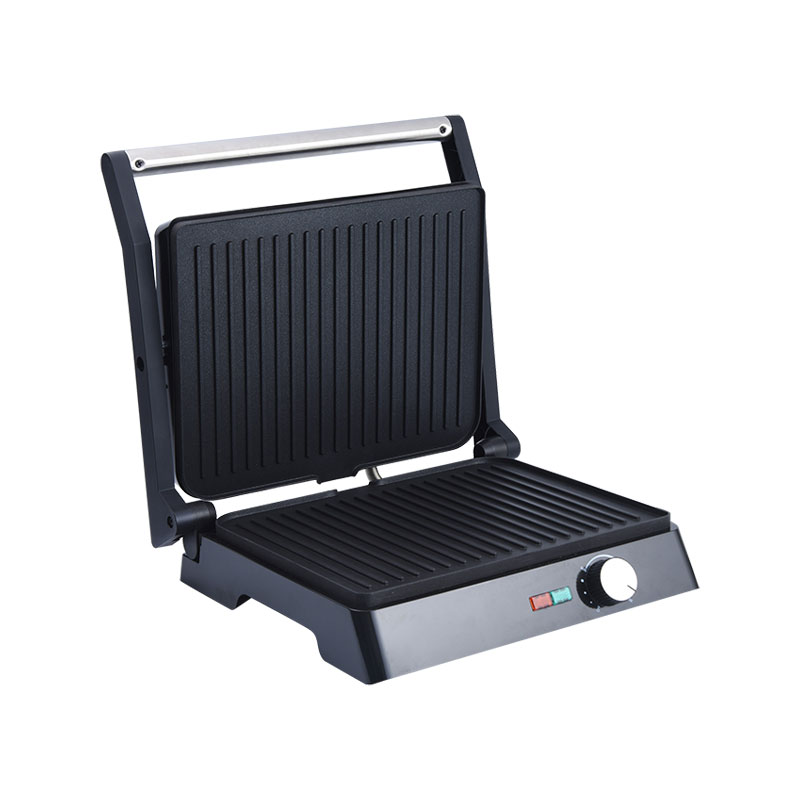 Double-Sided Lift Grill with Dual Independent Temperature ControlThis double-sided grill features independently heated upper and lower plates, enabling pressing thick cuts while grilling thin slices simultaneously. Its nonstick coating and overload protection suit frequent Korean BBQ cooking at home or in small food stalls.View Product →
A double-sided lift grill is a particularly interesting piece of equipment for bulgogi lovers who also cook other Korean barbecue items at home. The upper plate can be lowered to press thicker cuts, while the lower plate works like a conventional grill pan when you cook thin slices of marinated beef. If you frequently host Korean BBQ dinners, the griddle surface lets you cook beef on one side and vegetables or pancakes on the other at the same time. This versatility is also why many commercial kitchen suppliers and wholesale buyers select double-sided grill units for small restaurants and food stalls that need to serve bulgogi quickly without occupying too much counter space.
For indoor cooking, one of the main objections is always smoke. The sugars and sesame oil in the bulgogi marinade start to smoke at high temperature, which can set off a kitchen alarm and leave a lingering odor. A smokeless grill solves this problem by drawing air through the cooking zone and filtering or dissipating the smoke before it reaches the room. We have written separately about how a smokeless grill actually works, but for bulgogi the practical benefit is that you can sear the beef at the right temperature without turning your kitchen into a Korean barbecue restaurant. If you are shopping for a dedicated bulgogi appliance, look for a model with a removable cooking plate; the sticky, caramelized residue from the marinade needs to be washed immediately after cooking, and a dishwasher-safe removable plate makes that chore painless.
The material of the cooking surface also deserves attention. Cast iron delivers outstanding heat retention but requires seasoning and careful drying. Aluminum alloy with a nonstick coating heats quickly and is easier to clean, which suits thin, fast-cooking foods like bulgogi. Some premium pans use a magnesium alloy base for even heat distribution and lighter weight; magnesium is also the material we use in our magnesium alloy grill pan line, and it performs well on gas stoves and indoor electric grills alike. The rule of thumb is simple: if you cook bulgogi more than twice a month, invest in the widest, most stable pan you can store, because a crowded pan is the most common reason bulgogi turns out dry and gray instead of caramelized and juicy.
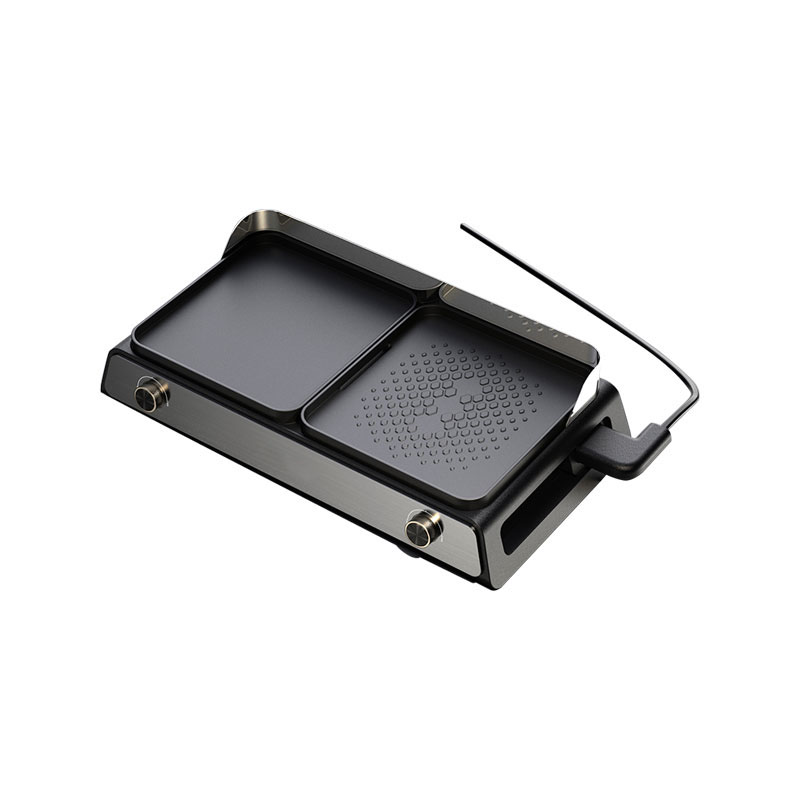 Magnesium Alloy Grill Pan with Dual Independent Cooking ZonesA lightweight magnesium alloy grill pan that heats evenly and resists warping, offering two independently controlled cooking zones. Its food-grade nonstick surface and simple stainless steel design make it practical for regular bulgogi cooking and wholesale customization.View Product →
Wholesale buyers and food service operators should consider the durability and production consistency of the pan. When you are sourcing equipment for a Korean restaurant, the ability to replace worn nonstick plates and the availability of matching spares matter more than the initial price. Our factory supplies both finished electric grill pans and semi-finished components, and we work with importers and brand owners through ODM/OEM programs; this means the same grill pan you love at home can be customized with your brand's color, handle design, and packaging for resale. For a home cook, however, any solid cast-iron or electric grill pan from a trusted supplier will produce far better bulgogi than a flimsy thin-bottomed skillet that warps after a few high-heat sessions.
Now that you have mastered the basic recipe and chosen your equipment, these professional tips will push your results from good to genuinely restaurant-level. They are the small details that Korean home cooks learn from years of practice, written here in a simple checklist so you can apply them immediately.
These tips apply whether you are cooking for a family of three or preparing bulgogi for a buffet of twenty. The core principle is the same: preserve the contrast between the caramelized surface and the tender interior. Any step that adds excess moisture, lowers the cooking temperature, or crowds the pan works against that contrast. When you cook with an electric grill, preheat it fully and close the lid only briefly if you want a steam-assisted finish; keep the lid open for most of the cooking time so steam escapes and the surface stays dry.
Bulgogi is one of those dishes that tastes excellent the moment it comes off the pan, but it can also be a lifesaver for meal prep. Cooked bulgogi stores well for several days, and the marinated raw beef can be frozen in portions for future quick dinners. Understanding the right storage and reheating methods helps you avoid the two most common problems: dried-out meat and rubbery texture.
Refrigerating cooked bulgogi: Let the cooked beef cool completely, then transfer it to an airtight container. It will keep in the refrigerator for up to 4 days. Because bulgogi contains sesame oil and sugar, the meat may release some liquid as it cools; this is normal. When you reheat it, use a frying pan rather than a microwave to restore the crust. Add a teaspoon of water or leftover marinade to the pan, cover it briefly to steam, then uncover and let the surface re-crisp over medium-high heat.
Freezing raw marinated bulgogi: For the best results, pack the marinated beef into a zip-top freezer bag, press out the air, and lay the bag flat in the freezer. Frozen raw bulgogi keeps for up to 3 months. Thaw it in the refrigerator overnight before cooking; do not thaw on the counter because the marinade contains raw meat juices. After thawing, you may notice that the pear and onion puree separated slightly, so stir the beef well and let it sit at room temperature for 10 minutes before you cook it.
Portioning for meal prep: A smart strategy is to divide the raw marinated beef into single-batch portions of about 150 grams before freezing. In the morning, move one portion to the refrigerator, and by dinner time it is ready to cook. This system reduces waste and gives you a zero-thought Korean dinner on busy evenings. Pair the reheated bulgogi with quick-cooking rice and a store-bought kimchi for a satisfying meal that takes only as long as the rice cooker needs.
Reheating in an oven: If you are reheating a large quantity for a family dinner, spread the bulgogi on a baking sheet and warm it in a 180°C (350°F) oven for 5 to 7 minutes. This method is more even than a microwave and works well for keeping the beef from clumping together. You can also reheat bulgogi on an electric grill pan set to high for a quick single-batch portion, which restores the charred edges best of all.
These are the questions we see most often from readers testing a beef bulgogi recipe for the first time, as well as from professional chefs and suppliers who plan to serve bulgogi on a commercial level. The answers combine practical kitchen knowledge with manufacturing and food service experience.
What is the best beef bulgogi recipe ratio for the marinade?A reliable ratio is 5 parts soy sauce, 2 to 3 parts sweetener, 1 part sesame oil, plus about half a grated pear and a quarter onion for every 500 g of beef. If you scale up or down, keep the soy sauce and sweetener within that range. Too much sugar burns, and too little soy leaves the beef flat. |
Can I use a regular pear instead of an Asian pear?Yes, but reduce the amount. A regular ripe pear is softer and more fibrous, so use about a quarter of a pear grated. If you cannot let the beef marinate for the full hour, regular pear can still help, though its enzymatic activity is weaker than that of Asian pear. |
Is it better to boil or grill bulgogi?Grill or pan-sear is the authentic method. You will sometimes see bulgogi cooked in a pot with a little water, but that is a home-style shortcut and produces a softer, less caramelized dish. For restaurant-quality texture, always use a dry hot surface so the sugar can brown. |
Why did my bulgogi turn out dry?Dry bulgogi is usually caused by three mistakes: using a lean cut, slicing too thick, or overcooking the beef. The cooking time per batch should be under 3 minutes. If the beef is still dry, reduce the marinating time with additional pear juice, and make sure your pan is hot enough to sear quickly rather than steam the moisture out. |
Can I cook beef bulgogi without a grill?Absolutely. A cast-iron skillet, a carbon steel wok, or a large nonstick frying pan all work well. The key is to heat the pan thoroughly before adding the beef, because a mediocre surface can still produce excellent bulgogi if the temperature is high enough. |
How long can I marinate bulgogi beef?For the classic recipe, marinate for at least 30 minutes and no more than 12 hours. Beyond 12 hours, the pear and onion enzymes can break down the meat fibers to the point where the texture becomes mushy. If you want to prepare far ahead, freeze the beef in the marinade instead; the freezing process slows enzymatic activity. |
What side dishes go well with beef bulgogi?Traditional Korean banchan such as kimchi, seasoned spinach, and pickled radish match the dish very well. Steamed rice and ssamjang are essentials. For a lighter meal, serve bulgogi over lettuce leaves with sliced cucumber and a sesame-soy dipping sauce. |
Can bulgogi marinade be reused?Never reuse raw marinade that has touched raw beef, because it can carry bacteria from the meat. If you want to use the marinade as a sauce for the finished dish, set aside a clean portion before adding the beef, or boil the used marinade for at least 1 minute before serving. |
To learn more about the appliances and manufacturing standards mentioned in this article, explore the following resources from our company website. They explain the technical side of grill design and how we build reliable kitchen equipment for both consumers and business clients.
If you are a brand owner, importer, or wholesale buyer looking for a partner to develop private-label grill pans, electric smokeless grills, or other kitchen appliances, we welcome inquiries. We operate as both a contract manufacturer and an original design manufacturer, which means you can source proven product designs, add your own branding, or commission a customized version with specific plate sizes, heating elements, and control interfaces.
Follow our social media to learn more about our updates


+86-13805815092

No. 11 Beihai Road, Xinqi Street, Beilun District, Ningbo City, Zhejiang Province, China
