


 中文简体
中文简体 English
 한국어
한국어 日本語
日本語 русский
 Español
 عربى
عربىIndustry News
Home / News / Industry News / How Long Can Rice Stay in the Fridge? Shelf Life, Safety, and Storage Rules

Sep 09, 2026
Content
Night comes faster than expected, and half a pot of steamed rice still sits in the cooker. The question is familiar: how long can rice stay in the fridge before it becomes a food-safety risk? The straightforward answer is three to four days for properly cooled and sealed cooked rice. Beyond that window, the risk of Bacillus cereus food poisoning climbs noticeably, and even if the rice still looks acceptable, the texture and flavor decline as well. This article explains the exact storage window, the science behind it, and the cooling, container, and reheating steps that let you keep rice safely for the maximum amount of time.
Cooked rice can stay in the refrigerator for three to four days when you follow basic food-safety rules. The United States Department of Agriculture and the Food and Drug Administration both cite this window as the safe limit for cooked grains. Many commercial kitchens and meal-prep services tighten that window to two days for the best quality, especially when the rice contains eggs, meat, seafood, or vegetables.
Several factors shift the exact expiration point:
The table below summarizes the practical shelf life of common cooked rice dishes under ideal conditions.
| Rice dish | Shelf life in the fridge | Best reheating method |
|---|---|---|
| Plain white rice | 3 to 4 days | Steamer or microwave with a damp towel |
| Brown rice | 3 to 4 days | Steamer or covered saucepan |
| Jasmine or basmati rice | 3 to 4 days | Steamer or skillet with a splash of water |
| Rice with vegetables or broth | 2 to 3 days | Skillet or microwave |
| Fried rice with egg, meat, or seafood | 2 to 3 days | Very hot wok or skillet |
| Rice porridge or congee | 2 to 3 days | Saucepan with added broth |
| Rice salad with dressing | 1 to 2 days | No reheating; serve chilled |
Food safety organizations agree that cooked rice keeps its safety margin for about three to four days in a standard refrigerator running at or below 40°F (4°C). Within that window, the exact shelf life depends on how the rice was cooked, how quickly it was chilled, and what ingredients were added. A plain steamed batch will usually outlast fried rice or rice mixed with vegetables because additional ingredients introduce more bacteria. The chart below compares the typical refrigerator shelf life of common rice dishes. Use it as a practical guide when you are planning meal prep, leftovers for lunch, or family dinner portions.
The pattern from this chart is clear: the simpler the rice, the longer it stays acceptable. Plain white and brown rice both hold for about four days, provided they were refrigerated within two hours of cooking. Brown rice contains more moisture and natural oils than white rice, yet it still manages the same shelf life when stored in an airtight container. The drop to three days for rice with vegetables or broth reflects the extra moisture and surface area that allow bacteria to multiply faster. Dishes that contain egg, meat, or seafood, such as fried rice, should be eaten within two to three days. These protein-rich ingredients are highly perishable and raise the baseline bacterial load. Rice salads with dressing fall into the shortest group because the acidic or creamy dressing provides an environment where microbes survive even at refrigerator temperatures. Restaurant leftovers and takeaway rice should be treated with the same rule: consume them within two to three days at the latest. One common mistake is pushing a batch of rice to the back of the fridge, then relying on how it looks before reheating. A faint sour smell or a sticky film on the grains is enough to discard the entire batch. These shorter windows are not arbitrary; they align with USDA and FDA guidance that specifically calls out cooked grains as high-risk leftover items. For practical purposes, you can plan to reuse Monday's rice by Thursday, but anything that crosses the fourth day should be frozen or thrown out.
Cooking white rice takes about fifteen to twenty minutes. The heat softens the starch, turns the grains tender, and gives you a flavorful base for dozens of meals. What most home cooks do not realize is that the same heat also prepares the rice for one of the most common forms of food poisoning in the world.
Rice is grown in wet paddies, and its outer layers naturally collect soil organisms. Among these is Bacillus cereus, a hardy bacterium that forms spores when conditions turn hostile. A spore is essentially a dormant shell. You can boil it, steam it, fry it, or bake it, and the spore can survive. Once the edible part of the rice cools, moisture returns, and the spore germinates back into an active bacterial cell.
The reason the CDC and FDA list cooked rice as a high-risk food is not simple spoilage. It is the fast multiplication that happens between 40°F and 140°F (4°C and 60°C). In that range, Bacillus cereus can double its population every twenty to thirty minutes. A single leftover grain can carry many thousands of cells after a few hours out of the pot.
Once the bacteria multiply, they form two kinds of toxins. One is heat-stabilized and appears in the food while the bacteria grow; this is the type that causes vomiting within one to five hours. The other develops in the digestive system and causes diarrhea after a longer incubation. Neither reaction is pleasant, and young children, older adults, and people with weakened immune systems can become severely ill.
This explains why the temperature history of the rice matters more than the color, smell, or taste. You cannot rely on your nose to detect a bacterial load that is already dangerous. The good news is that a standard refrigerator at 40°F or below holds Bacillus cereus in check. The safest habit is to treat the three-to-four-day refrigerator window as a hard limit and never judge the safety of rice by appearance alone.
The USDA built its food safety advice around the idea of a danger zone. Any temperature between 40°F and 140°F allows bacteria to grow quickly. For cooked rice, the danger zone starts the moment the rice stops steaming. If the room is hot, above 90°F, the safe sitting time shrinks from two hours to one hour.
Why does this matter if the rice will go into the fridge anyway? Because the refrigerator cannot undo bacterial growth that already happened on the counter. The cells and toxins that formed before chilling stay in the food. Chilling only pauses further growth. In other words, how long can rice stay in the fridge safely depends a great deal on what happened in the first two hours after cooking.
Take a common weekday scenario. You cook two cups of rice at 6 p.m., serve dinner, and leave the rice pot on the stove while you clean up. You finish the dishes at 7:30, realize the rice is still out, and put the pot into the fridge at 7:45. The rice has been in the danger zone for about an hour and forty-five minutes. That is within the two-hour rule, but barely. If you repeat this habit for years, the cumulative exposure is significant.
Commercial kitchens use a stricter version of this rule. ServSafe, the food-handler training standard, requires cooked food to be cooled from 135°F to 70°F within two hours and then from 70°F to 41°F within four more hours. The total six-hour cooling process is what large food-service operations follow. Home kitchens rarely need that level of precision, but the principle is useful: cool food quickly, track the time, and only then refrigerate.
A safe sequence looks like this:
The fastest way to cool rice depends on how much you cooked. A single cup of leftover rice cools quickly if you simply shift it to a small bowl and refrigerate it. A large pot of rice for a family gathering needs a more deliberate strategy because the center of the mass retains heat for a long time.
Start by spreading hot rice onto a clean baking sheet or a wide stainless-steel tray. Spreading creates more surface area and releases steam quickly. Stir the rice gently every few minutes to pull heat from the center. The goal is to bring the rice down from about 140°F to room temperature quickly without leaving it out long enough for spores to germinate.
Another reliable technique is the ice-water bath. Put the pot into a larger basin filled with cold water and ice, then stir the rice occasionally. The cold water absorbs heat through the pot walls, and the stirring distributes the cooling evenly. For very large batches, several shallow trays in the refrigerator work better than one deep pot.
| Approved rapid cooling methods | Methods that increase risk |
|---|---|
| Spread rice on a clean baking sheet so steam escapes quickly. | Piling rice in a deep bowl while it still steams. |
| Place the pot in an ice-water bath and stir every few minutes. | Leaving the pot on the stovetop with the lid on. |
| Divide rice into several shallow containers before refrigerating. | Putting a large warm pot directly into the fridge, which raises the fridge temperature. |
| Cool rice in a single layer and transfer to an airtight container once it stops steaming. | Reusing the same lid from the cooking pot without venting moisture. |
Professional food-service training uses a two-stage cooling target. In the first stage, the rice should drop to 70°F within one hour. In the second stage, it should reach 41°F or below within the next hour or two. Home refrigerators are less powerful than walk-in coolers, so the practical takeaway is this: create as much surface area as possible, do not seal the container until the steam has stopped, and never let rice sit out while you sleep.
The container you choose influences how long can rice stay in the fridge in two ways. First, an airtight seal prevents the rice from drying out and stops it from absorbing odors from other foods. Second, the shape of the container controls cooling speed. A wide, shallow container allows the rice to chill many times faster than a tall, narrow jar with a tight mouth.
Glass containers with snap-on lids are the most reliable everyday option. Glass does not absorb oil, grease, or smell, and you can see the condition of the rice without opening the lid. Plastic containers are lighter and cheaper, but they can stain or retain odors after a few months. Stainless-steel containers cool rice faster than glass or plastic because metal conducts heat well, though you cannot use them in the microwave and some metal lids are not perfectly airtight.
| Container type | Best for | Watch out |
|---|---|---|
| Glass with airtight lid | Best overall; non-porous, no staining, easy to clean | Heavier; can be expensive |
| BPA-free food-grade plastic | Lightweight, low cost, stackable | May stain or absorb strong odors |
| Stainless steel with lid | Durable, cools rice quickly | Not microwave-safe; lid may not be fully airtight |
| Silicone bags | Space-saving, flexible, freezer-friendly | Harder to fill and wash thoroughly |
When you store rice in the fridge, shallow containers are always better than deep ones. The chart and table in this article assume the rice is in a container no deeper than about two inches (5 cm). If you are using a tall pot or a narrow bowl, reduce the expected shelf life by a day because the rice in the center will not cool quickly enough.
| Shallow rectangular containers cool rice faster than deep round bowls because the exposed surface area is larger. Look for containers no deeper than 5 cm and fill them only halfway. | Avoid containers with tight necks or narrow mouths, such as thermos jars or drink bottles, because rice cannot spread out and the center stays warm for hours. |
Every batch of refrigerated rice should have a date label. A simple sticker or a piece of masking tape with the date written on it prevents the guessing game that usually ends in either food waste or a risky meal. When you store multiple containers, place the older batch at the front so you use it first.
Reheating does not fix a safety problem; it only restores a safe food to a pleasant temperature. If the rice was left out too long or stored past day four, no amount of heat makes it safe. The internal temperature of reheated rice must reach 165°F (74°C) so that any vegetative cells that survived cold storage are destroyed before serving.
Steaming is the gentlest way to reheat rice. Place the rice in a steamer basket and let the moist steam penetrate the grains. The heat hydrates the rice rather than drying it out, which is why many restaurant kitchens use steamer equipment for leftover grains.
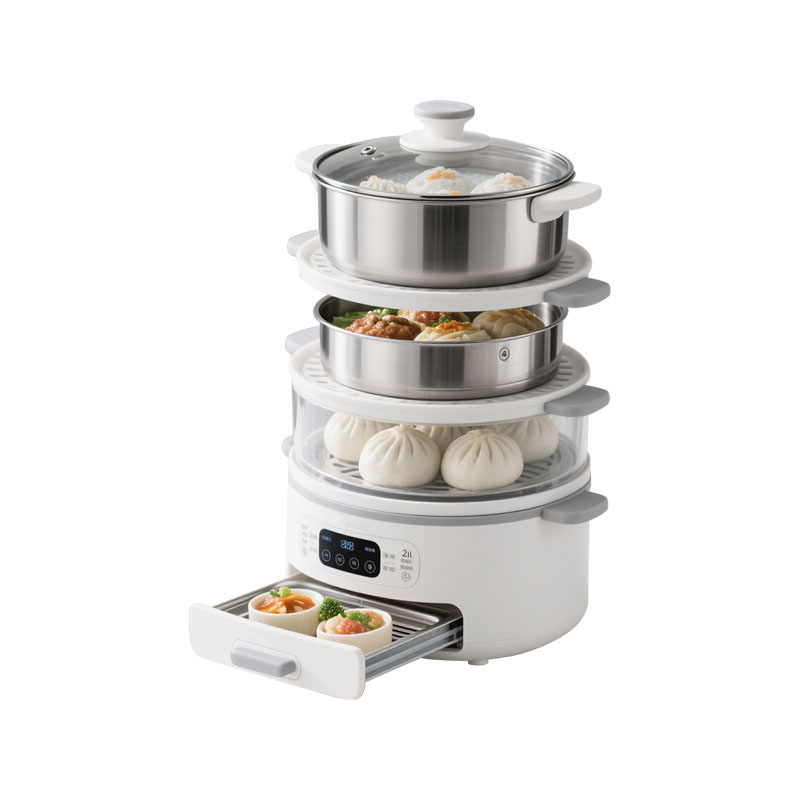 304 Stainless Steel Steamer Pot with Dual-Layer DesignThis steamer pot supports gentle rice reheating with a wide base and split design, letting you steam on top while boiling below. Its 304 stainless steel body and safety features suit restaurant-style preparation.View Product →
A 304 stainless steel steamer pot is a practical partner for this routine because it gives you a wide base for the steamer basket and keeps the rice away from direct contact with boiling water. Steam at medium-high heat for five to eight minutes, then check the center of the rice with a thermometer. This method also works well for frozen portions.
The microwave method is faster but requires care. Put the rice in a microwave-safe bowl, sprinkle it with one tablespoon of water per cup of rice, cover the bowl with a damp paper towel or a vented microwave lid, and heat on medium power in sixty-second intervals. Stir between intervals so the rice heats evenly.
The skillet method suits fried rice and stir-fried dishes. Add a little oil and a splash of water or soy sauce to the pan, add the cold rice, and toss over medium-high heat until the grains are piping hot and slightly toasted at the edges. This method works best when the rice was stored without excessive moisture.
Never reheat a batch of rice more than once. Each reheating cycle passes the rice back through the danger zone for several minutes, and any spores that have survived will germinate once the rice cools again. Remove the portion you plan to eat, reheat it completely, and return the rest to the refrigerator immediately.
Freezing is the most reliable way to extend the life of cooked rice far beyond the three-to-four-day fence. Properly frozen rice can keep for up to six months without meaningful food-safety risk, and the texture stays reasonably good when the freezing is fast and portions are small.
To freeze cooked rice, cool it quickly in the same way you would before refrigeration. Then pack the rice into labeled freezer bags, remove as much air as possible, and press the bag flat. Flattened bags freeze and thaw quickly, take up little space, and let you snap off exactly the portion you need.
To use frozen rice, keep it in the fridge overnight or reheat it directly from frozen using a steamer or a covered pan with a little water. Direct-from-frozen reheating takes longer, but it avoids a thawing step that could push the rice back into the danger zone.
There is one important rule about freezing cooked rice: freeze it before day four. If rice has already sat in the refrigerator for three days, bacterial spores may have started germinating at low speed. Freezing the rice then will preserve it in a less safe state. The standard recommendation is to freeze plain cooked rice within one to two days of cooking so that you always have a fresh-tasting backup.
Bacillus cereus does not always create an obvious warning sign, but the rice does give us signals when it has spoiled. The earlier you notice them, the earlier you can discard an unsafe batch and avoid a night of food poisoning symptoms.
If you see any of these signs, do not taste the rice to confirm. The dose needed to make a healthy adult sick is very small. When the date label is missing and you cannot remember when the rice was cooked, follow the shorter and safer assumption: if it is older than three days, discard it.
Commercial kitchens operate under a different standard than home kitchens. A restaurant that serves cooked rice to hundreds of customers cannot rely on the home rule of three to four days in the fridge; instead, it must follow HACCP plans and local food safety regulations. The core principle is the same, but the margins for error are much thinner because a single contaminated batch can sicken many people at once.
Restaurants that serve large volumes of steamed rice typically use a batch system: cook a pot every forty-five to sixty minutes instead of one giant batch at the start of the day. This approach keeps the rice fresh and reduces the amount that needs to be chilled. Leftover rice from lunch service must be refrigerated within two hours, used within three days, or frozen.
Food suppliers and wholesalers who distribute cooked rice dishes need robust cold-chain logistics. Even in the wholesale sector, the food-safety rules for the product itself remain the same: rapid cooling, airtight packing, strict refrigeration, and a three-to-four-day limit for any batch that has not been frozen. A wholesale buyer who sells a five-day-old batch is exposing the entire downstream supply chain to liability.
One direct way to reduce waste is to match cooking capacity to demand. Commercial consultants often see kitchens cut leftover rice by nearly a third after switching to smaller, more frequent batches and using a cooling rack to speed the first stage of temperature reduction. The equipment that supports this routine matters just as much as the storage protocol. For example, a lightweight magnesium alloy pot can ease the constant lifting and turning that batch cooking requires, while a wide grill pan or electric baking pan helps kitchens repurpose leftover rice into fried dishes before it reaches the end of its shelf life.
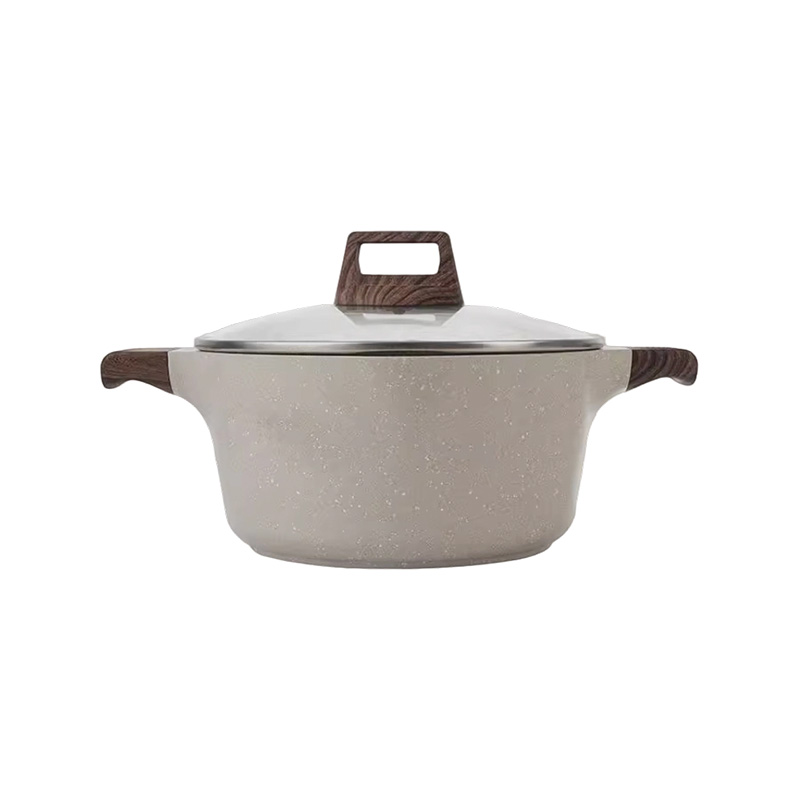 Lightweight Magnesium Alloy Pot with Glass Lid and Ceramic CoatingThis pot eases batch cooking and leftover repurposing with a transparent glass lid and wear-resistant ceramic coating. Compatible with induction and open flame, it fits busy kitchen workflows while reducing lifting strain.View Product →
For food-service brands that want to bring their own kitchen-equipment line to market, working with a reliable appliance manufacturer reduces the risk of recalls and quality complaints. A manufacturer with in-house mold making and metal parts production can control tolerances more tightly. That is why many wholesale buyers now evaluate production lines the same way they evaluate finished products. When you choose a supplier for commercial steamers, rice cookers, and warmers, ask about material grade, testing procedures, and delivery time; these details affect how well the equipment supports safe rice storage in real kitchens.
Can I eat rice that has been in the fridge for 5 days?It is not recommended. The USDA window for cooked rice is three to four days, so rice stored for five days is already beyond the safe limit even if it looks and smells fine. Bacillus cereus spores can germinate slowly under refrigeration, and the heat-stable toxin they produce will survive reheating. Discard rice after day four or freeze it by day three. |
Can I put hot rice directly in the fridge?Yes, for small portions. The USDA says you can refrigerate hot food in shallow containers without waiting for it to cool completely. The risk with a large pot is that it raises the temperature of the entire refrigerator and keeps the center of the rice warm for hours. For large batches, divide the rice into small containers or spread it on a tray before refrigerating. |
Does reheating rice kill all bacteria and make it safe?Reheating to 165°F kills the active bacteria that are present, but it does not destroy the heat-stable toxin that Bacillus cereus already produced while the rice sat in the danger zone. If the rice was left out for more than two hours, reheating will not reliably make it safe. Reheating is only safe when the rice was properly chilled and stored in the first place. |
Why is leftover rice considered more dangerous than leftover pasta?Rice is a more favorable medium for Bacillus cereus because the spores attach naturally to the grain during growth in flooded paddies. Pasta can also grow bacteria, but it does not carry the same spore load from the field. Both foods still follow the same basic rule: refrigerate within two hours and use within three to four days. |
Can I re-refrigerate leftover rice after reheating it?It is best not to. Every reheating cycle pushes the rice back through the danger zone for several minutes, and any spores that survive will germinate once the rice cools again. Reheat only the portion you plan to serve and throw away the rest of the reheated rice. Repeated reheating shortens the total safe storage life noticeably. |
What is the correct way to store leftover rice in the fridge?Cool the rice quickly, transfer it to a shallow airtight container, label it with the date, and place it on a middle shelf of the refrigerator rather than the door. The door is the warmest part of the fridge and experiences temperature swings every time it opens. Under these conditions, plain cooked rice stays safe for three to four days. |
Does a bad smell always mean refrigerated rice is no longer safe?No. A sour smell is a late sign of spoilage. In the early stage of Bacillus cereus contamination, the rice can still smell normal while the bacterial count is already high enough to cause illness. Never do a taste test to check safety. Trust the three-to-four-day limit and the storage history rather than your senses alone. |
Knowing how long can rice stay in the fridge is not a complicated formula. The answer is rooted in one simple biological fact: Bacillus cereus spores survive cooking and germinate when rice stays warm. The countermeasure is a disciplined routine that covers four stages: cool quickly, seal tightly, refrigerate promptly, and reheat completely.
These rules apply to home meal prep, restaurant batch cooking, and wholesale food distribution alike. The packaging, container material, and equipment may change, but the safety limit for chilled rice stays the same. If you are planning large quantities for a catering event, set up a cooling station before the rice comes off the stove. A few minutes of preparation at the cooking stage will save you from an entire batch crossing the danger line.
If you own a kitchen equipment brand, import cooked-rice products, or run a wholesale food business, remember that the storage practice is part of the product experience. Reliable equipment that cools and reheats rice gently gives you a competitive edge.
To learn how an experienced kitchen appliance manufacturer builds electric cookware, steamers, and metal components with food safety in mind, visit the company manufacturing overview page. You can also browse the product range to see how steamers, rice cookers, and multi-function cookers support safe, efficient cooking at home and in commercial kitchens.
Follow our social media to learn more about our updates


+86-13805815092

No. 11 Beihai Road, Xinqi Street, Beilun District, Ningbo City, Zhejiang Province, China
