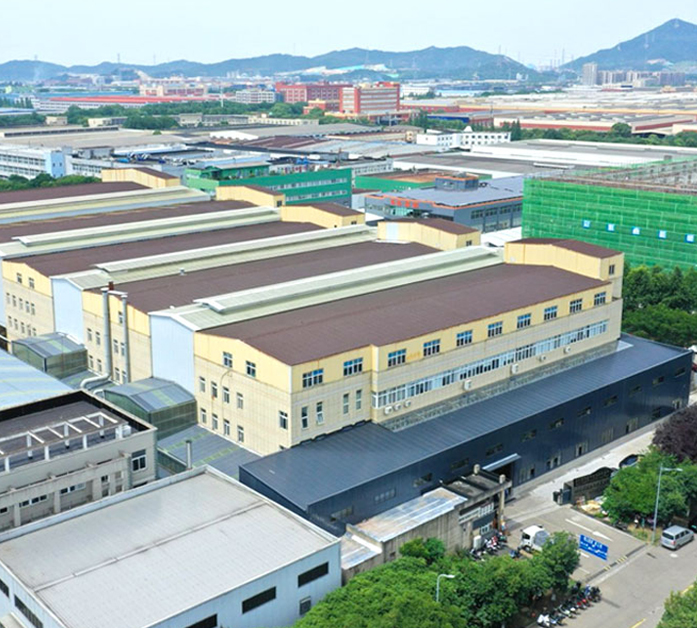
Ningbo Victor Electrical Technology Co., Ltd. manufactures Magnesium-Aluminium Alloy Mould and Parts Processing Series manufacturer capability for kitchen appliance programmes. Our Beilun facility runs semi-solid magnesium alloy injection moulding, aluminium alloy die-casting, a mould workshop, CNC finishing and small-appliance assembly under one roof, so a component project can move from tool design to finished parts without leaving our supply chain.
What We Supply in This Series
This series covers three connected activities: magnesium-aluminium alloy mould processing, aluminium alloy component processing and semi-solid magnesium alloy component processing. They serve the structural and thermal parts inside kitchen appliances — heating plates, pan bodies, housings, brackets and covers — and extend to comparable parts for other light-weighting applications.
Victor has produced kitchen appliances commercially since 2019, and the component workshops were built to support that product line. Our mould and parts work therefore carries appliance-level requirements: wall thickness control, flatness on heated surfaces, coating adhesion and dimensional consistency across high-volume runs.
Semi-Solid Magnesium Alloy Component Processing
Thixomolding-style injection of magnesium alloy in a semi-solid state for thin-wall, high-integrity parts. Suited to heating plates, housings and lightweight structural components where porosity and thermal cracking must be controlled.
Aluminum Alloy Component Processing
High-pressure die-casting plus CNC finishing for aluminium parts that need good thermal conduction, moderate weight and cost-stable mass production. Used for pan bodies, frames, heat-transfer structures and appliance internals.
Magnesium-Aluminium Alloy Mould Processing
In-house tool design and manufacture for both magnesium and aluminium parts, with cooling-channel layout, demoulding slope and surface finish specified for the alloy. Moulds are built and maintained for repeat production runs.
Where Each Process Fits
Process choice follows the part's duty. Heated surfaces and thin-wall covers for our Magnesium Alloy Series lean on semi-solid magnesium injection because it holds flatness and reduces machining after casting. Larger structural frames and heat-spreading parts are usually aluminium die-castings finished on our CNC centres.
| Part type |
Typical process |
Key specification focus |
Finishing route |
| Electric baking pan / heating plate |
Semi-solid magnesium injection |
Flatness, wall thickness, thermal stability |
CNC trim, coating, assembly |
| Appliance housing / cover |
Magnesium or aluminium moulding |
Dimensional tolerance, surface finish, draft angle |
Shot blast, anodise or paint |
| Frame / bracket / heat spreader |
Aluminium high-pressure die-casting |
Strength, flatness, thermal conduction |
Five-axis CNC, deburr, assembly |
| Mould / tooling insert |
Mould processing |
Cavity tolerance, cooling layout, steel grade |
EDM, wire cut, polishing, trial |
Engineering Value Inside the Project
Our component workshop, die-casting lines and 23 CNC machining centres sit alongside the appliance assembly lines. That arrangement shortens the loop between a design change and a physical part, and it lets us test a moulded component in the finished appliance before committing to volume.
- DFM before tooling: draft, wall thickness, gate position and ejection are reviewed against the alloy before the mould is cut.
- Material selection: magnesium or aluminium is chosen by duty — weight, thermal load, conductivity, coating route and cost.
- Machining strategy: critical faces, sealing surfaces and mating features are scheduled on CNC rather than left to as-cast tolerance.
- Assembly integration: parts can be delivered loose or built into the appliance assembly, including our product range of grill pans, waffle makers and coffee machines.
- Change control: tool corrections, material substitutions and finish changes are recorded with the project file.
Quality Control and Acceptance
Quality is handled in the flow of production, not at the end of it. Defect data is recorded electronically at each workstation and reviewed in real time, so a drift in dimension or surface condition is corrected before a batch closes. A 200–300 m² in-house testing centre supports both development and routine verification.
Acceptance evidence for a mould and parts project typically includes:
- First-article inspection report with dimensions, material and finish results.
- Material certificates for the alloy grade used in the run.
- Dimensional reports on critical features, sampled per the agreed inspection plan.
- Appearance and coating checks against a signed golden sample.
- Assembly fit check when the part is supplied into a finished appliance.
Configuration Options We Build Around
Every project starts from the part drawing and the production target, not from a fixed catalogue. The variables we resolve with the customer include:
Alloy and grade
Magnesium or aluminium, with grade selected for strength, thermal duty and finishing.
Tooling scope
New mould, modification of an existing tool, or part supply against customer-supplied tooling.
Surface route
As-moulded, shot-blasted, anodised, painted or coated, depending on the part's exposure.
Machining allowance
Near-net parts with selective CNC finishing, or fuller machining where tolerances demand it.
Packaging
Bulk, layer-packed or kitted for the assembly line, with labelling agreed per shipment.
Documentation
Drawings, inspection plans, material records and change notes issued with the project.
Installation, Maintenance and Spare Parts
Moulds are delivered with a cooling-circuit diagram, recommended clamping data and a maintenance schedule for cleaning, polishing and wear inspection. For parts supplied into appliances, we retain the tooling and process records so repeat orders run from the same parameters.
When a mould reaches the end of a production campaign, we can refurbish inserts or rebuild the tool. Spare parts for processed components follow the same drawing revision as the original order, which keeps fit and finish consistent across shipments.
Information We Use to Configure Your Solution
To prepare a mould and parts proposal, we work from the following inputs. The more of these are defined, the more precise the tooling scope and unit cost.
| Input |
Why it matters |
| 3D model and 2D drawing with tolerances |
Defines cavity layout, draft and machining allowance. |
| Alloy grade or performance target |
Drives process choice between magnesium and aluminium. |
| Surface finish and coating requirement |
Sets polishing grade, anodising or paint route. |
| Annual volume and order pattern |
Sizes the tool, cycle plan and packaging. |
| Assembly interface and mating parts |
Confirms fit checks and sub-assembly scope. |
| Inspection and documentation standard |
Aligns FAI, sampling and reporting with your acceptance process. |
| Target market and compliance needs |
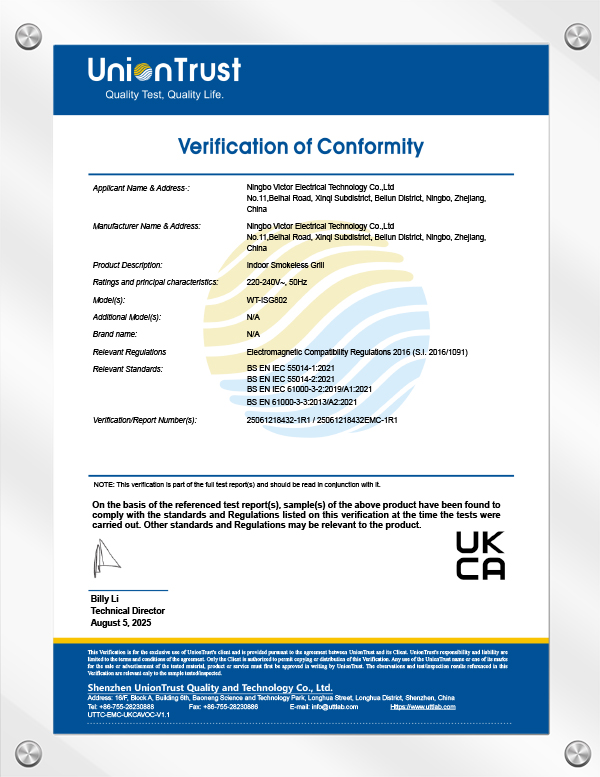
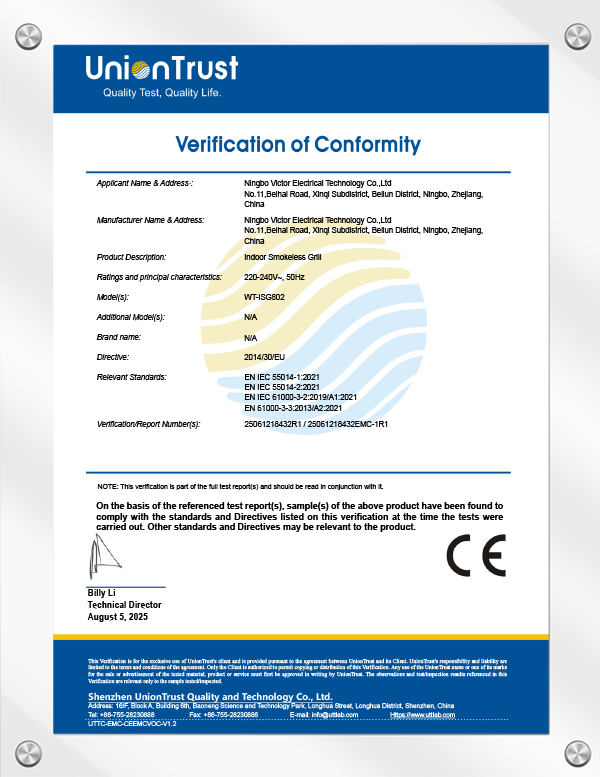
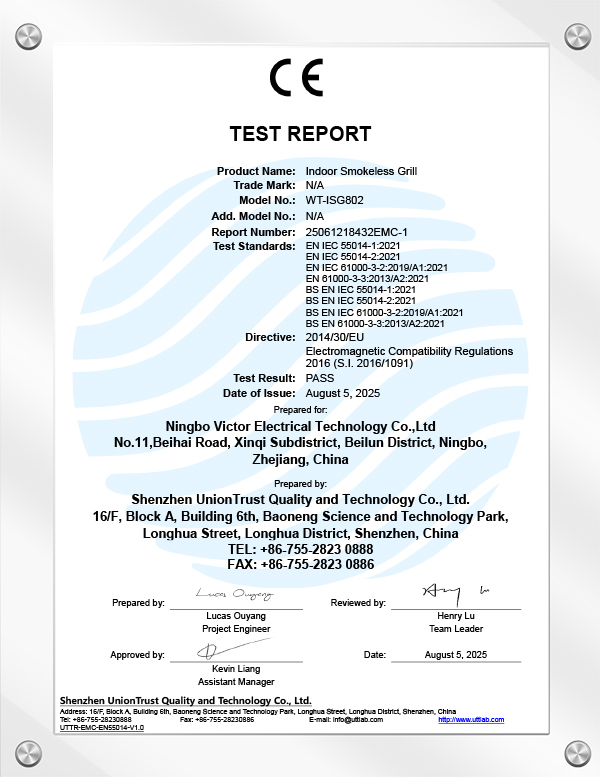
Flags material declarations and end-product certification. |
Frequently Asked Questions
What parts can Victor process in this series?
We process magnesium and aluminium components for kitchen appliances — heating plates, pan bodies, covers, frames, brackets and internal structures — and comparable parts where light-weighting and thermal performance matter. Moulds for those parts are designed and built in our own mould workshop.
How do you choose between magnesium and aluminium for a component?
The decision follows duty and environment. Magnesium suits parts where weight reduction and thin-wall stiffness dominate, such as heated plates and housings. Aluminium is preferred where thermal conduction, corrosion behaviour or cost per part is the deciding factor. We review both routes against the drawing before quoting.
Can you supply processed parts without the finished appliance?
Yes. Parts and moulds can be delivered on their own, or combined with appliance assembly from our small-appliance lines. Projects that need both are scheduled so the component run and the assembly build use the same tooling revision.
What documentation comes with a mould and parts order?
Orders are issued with drawings, an inspection plan, material records and a first-article report. Mould deliveries include cooling-circuit data and a maintenance schedule. Additional reports are agreed at the quotation stage against your acceptance requirements.
How do you protect dimensional consistency over repeat batches?
Process parameters are fixed at trial and recorded with the tool. In-process defect data is captured electronically, and critical dimensions are sampled per the inspection plan. Any tool correction is documented and reflected in the next batch.
Do you support OEM and ODM development for new components?
We do. Projects can begin from a concept sketch or a finished drawing, move through DFM review, prototyping and mould making, and continue into mass production. Our iron and appliance lines show the end uses these components are built for.



 中文简体
 English
 한국어
 日本語
 русский
 Español
 عربى