


 中文简体
 English
 한국어
 日本語
 русский
 Español
 عربى
Industry News
Home / News / Industry News / Best Nonstick Baking Sheets: Practical Selection, Testing, and Sourcing Guide

Nov 17, 2026
Content
If you want the short answer, choose a rimmed half-sheet pan with a thick steel core, an even nonstick coating, and a base that stays flat after repeated heating and washing. For a home kitchen, two half sheets are more useful than one very large pan. For wholesale buyers, coating adhesion, packing protection, and flatness after shipping matter as much as the release surface itself. That is the practical way to judge the best nonstick baking sheets without relying on a single brand name or a single test batch.
Nonstick baking sheets are simple products with a lot of small decisions inside them. The pan has to handle cookies, roast vegetables, bake chicken pieces, and survive the sink. It also has to arrive at a retailer or distributor without dents, scratches, or curled corners. A pan that looks good in a photo can still fail in daily use if the steel is too thin, the rim is too sharp, or the coating is applied over a surface that was not properly prepared.
The best nonstick baking sheets are not the thickest or the shiniest by default. They are the pans that balance heat spread, weight, release performance, and cleaning. A useful half sheet pan usually has a steel core that feels firm when you hold one corner and tap the base. If the pan flexes easily before it is even hot, it will be more likely to warp when it meets a hot oven and a cool counter.
The coating should look even, with no bare patches near the rim or the corners. A good nonstick surface is smooth enough for eggs and sticky glazes, but it should not look like a thick painted layer that can peel at the edge. Buyers should also look at the rim. A rolled rim with a clean finish is easier to handle and less likely to trap water. Sharp cut edges are a warning sign because they invite rust and coating wear.
A nonstick baking sheet is a tool, not a display piece. It should feel stable when loaded with vegetables or a tray of chicken, and it should clean up without soaking. If the pan needs a long soak after a simple roast, the coating is not doing its job.
Half sheet pans are the most useful size for most homes because they fit a standard oven and still hold a family-sized batch of vegetables or cookies. Quarter sheet pans are better for small batches, toaster ovens, and prep work. Jelly roll pans are wider and shallower, which makes them useful for thin cakes and sheet-pan dinners, but less useful for saucy foods. The table below is a practical starting point for buyers comparing nonstick rimmed baking sheets.
| Format | Best use | Buyer watchpoint |
|---|---|---|
| Half sheet | Cookies, roasted vegetables, chicken pieces, batch cooking | Check base flatness and rim strength after carton drop tests |
| Quarter sheet | Small batches, toaster oven use, prep and serving | Confirm the coating is even in the corners and near the rim |
| Jelly roll pan | Thin cakes, sheet-pan meals, shallow roasting | Check sidewall height and whether the pan flexes under load |
| Deep rimmed pan | Roasting vegetables with oil, saucy tray bakes | Check corner welds and coating coverage at the deepest points |
Gauge matters, but it is not a simple “thicker is always better” story. A pan that is too thin warps and sounds hollow. A pan that is too heavy can be tiring for home cooks and costly to ship for wholesalers. The sweet spot is a steel core that feels controlled in the hand and stays flat through normal oven temperatures. Buyers should ask for a flatness check after a heat cycle, not only before packing.
Rim height also changes how a pan behaves. A shallow rim lets air move around cookies and gives a cleaner edge. A deeper rim holds oil and juices, which is better for vegetables and tray bakes, but it also makes the pan harder to clean if the coating is weak. For a retailer, a clear format range is easier to sell than a confusing set of near-identical sizes.
Most complaints about nonstick baking sheets come from two places: the coating starts to fail near the rim, or the pan warps and no longer sits flat. Coating failure often begins with poor surface preparation, thin coverage at the corners, or abrasive cleaning. Warping usually comes from a thin base, a fast temperature change, or a pan that was already stressed during packing. Neither problem is solved by a label alone.
For home cooks, the practical test is simple. Bake a tray of oiled vegetables at a normal roasting temperature, let the pan cool for a few minutes, and then wash it with a soft sponge. If the surface needs scraping, the release coating is not helping. For buyers, ask for coating adhesion checks, salt spray results on cut edges, and a heat-cycle flatness check. These are more useful than a glossy catalog photo.
 Magnesium Alloy Electric Baking Pan with Dual-Sided HeatingFor buyers comparing nonstick bakeware and metal forming, this electric pan offers independent upper and lower temperature control, a food-grade nonstick coating, and overheating protection.View Product →
Material choice also affects the story. Some kitchens prefer a coated steel sheet for cookies and delicate bakes. Others want a pan that can move from roasting to serving with less worry about scratches. Victor Electric Appliance Technology Co., Ltd., also presented as Ningbo Victor Electrical Technology Co., Ltd., works with magnesium alloy and aluminium parts as well as finished cooking appliances. That background is useful when a buyer wants a supplier who understands both the pan surface and the metal forming behind it.
A sourcing scorecard helps a buyer compare pans before samples arrive and keeps the conversation focused on use, not appearance. The weights below are an illustrative example, not a lab result or a fixed industry standard. A home-focused program may care more about release and cleaning, while a wholesale program may put more weight on flatness after shipping and packing quality.
The chart is deliberately simple. It gives a product team a shared way to talk about trade-offs before they ask for samples. A pan can score well on release but still fail if the carton is weak or the corners rub during transport. A supplier can offer a strong coating but lose the order if the rim feels sharp or the flatness check is not documented.
Victor’s public product range includes magnesium alloy baking pans, grill pans, and electric cooking appliances, which gives buyers a useful reference point for pan construction and surface handling. A buyer can use the same scorecard when comparing a nonstick baking sheet program with a magnesium alloy pan concept. The point is not to copy one product type, but to ask consistent questions about heat, cleaning, packing, and after-sales risk.
Use the scorecard as a discussion tool, not as a substitute for samples. Ask each supplier to explain how the pan is formed, how the coating is cured, and how flatness is checked after packing. Those answers usually reveal more than a line item on a quotation sheet.
Cookies are only one job. A good baking sheet also handles roasted cauliflower, chicken thighs, peppers, and tray-bake dinners. For those foods, a slightly deeper rim and a stable base matter more than a perfect cookie finish. Oil and juices can find weak spots in a coating, so the inside corners need full coverage, not just the center of the pan.
Electric cooking pans are a separate category, but the buying logic overlaps. A pan that is easy to clean, has a removable plate, or offers temperature control can reduce the mess of indoor cooking. Victor’s range includes indoor smokeless grill pans and magnesium alloy cooking pans, which sit in the same practical space as a baking sheet: heat, release, cleaning, and storage. The difference is that an electric pan adds a heating element and a control system.
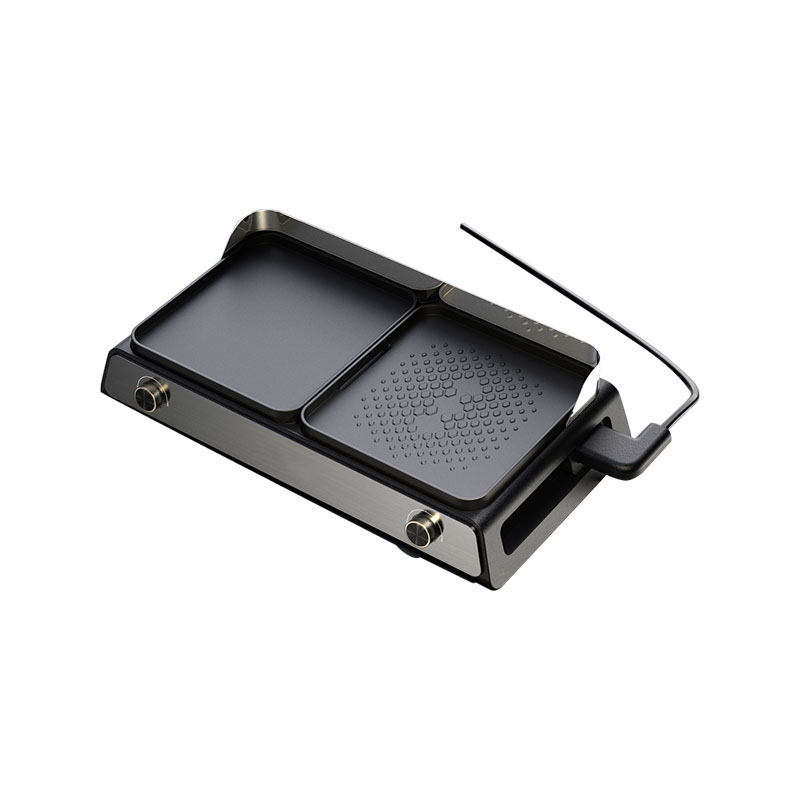 Magnesium Alloy Electric Grill Pan with Dual-Zone ControlAs a separate electric cooking category, this dual-disk grill pan offers adjustable temperature, nonstick cleaning, and automatic protection for indoor grilling.View Product →
For a retailer, the lesson is to separate “baking sheet” from “baking system.” A nonstick sheet is a simple accessory. An electric pan is a small appliance with safety, controls, and user instructions. Both can live in the same kitchen, but they need different product pages, different care guidance, and different packing tests. Mixing the two in one listing usually confuses the buyer and creates avoidable returns.
For a wholesaler, the most expensive problem is not a single failed pan. It is a container of pans that warps, peels, or arrives with scuffed corners. A nonstick baking sheet manufacturer should be able to explain the steel or aluminium base, the coating system, the curing process, and the packing method. A supplier who only sends a photo and a price is not giving a buyer enough to manage risk.
A practical sourcing checklist should include sample flatness, coating adhesion, rim finish, carton drop protection, and care instructions. If the order is for OEM or ODM work, ask who controls the tooling, how the coating color is matched, and how the first article is approved. Lead time and export experience matter as well. Victor’s public profile describes an export rate of 60% and an average delivery time of about 45 days, which are useful reference points when planning a program.
If you need a manufacturing partner for kitchen appliances or metal parts, review the ODM/OEM kitchen appliance manufacturing process and contact the manufacturing team with your pan format, coating request, and order volume.
Do not treat a low quotation as the final landed cost. Add packing, testing, replacement allowance, and the cost of handling customer complaints. A slightly higher unit price with documented flatness checks and stronger cartons can be cheaper over a full season. That is especially true for online sellers who cannot inspect each pan before it reaches the customer.
Even a well-made nonstick baking sheet can lose its advantage through rough handling. Avoid metal spatulas that gouge the surface, and do not stack pans without a liner between them. Let the pan cool before washing when possible. A sudden change from a hot oven to cold water can stress the base and increase the chance of warping, especially in thin pans.
Wash with a soft sponge and mild detergent. If food sticks, soak in warm water rather than scraping. Dry the rim and corners fully before storing. For wholesale programs, print these points on the care card and on the retail packaging. Simple care guidance reduces returns and protects the product’s reputation after the sale.
Yes, if the pan fits your oven and feels stable when loaded. A good nonstick half sheet saves cleanup time and makes everyday roasting easier. The value comes from flatness, even coating, and a comfortable rim, not from a decorative finish.
With careful washing and no metal tools, a coated pan can last for years. The coating will still wear over time, especially near the rim. Replace the pan when food sticks across large areas, the coating lifts, or the base no longer sits flat.
A half sheet is the most useful first size for most homes. It handles cookies, vegetables, and tray bakes without crowding a standard oven. Quarter sheets are useful as a second pan for small batches and prep work.
Many manufacturers can discuss coating color, pan format, logo placement, care cards, and carton design as part of an OEM or ODM program. The buyer should confirm minimum order quantity, sample approval steps, flatness checks, and packing tests before production begins.
Ask for a heat-cycle flatness check and a carton drop test. Place the sample on a flat surface after cooling and look for rocking or a visible gap at the corners. A pan that warps in the sample stage is likely to create returns later.
No. A baking sheet is an oven accessory. An electric baking pan has a heating element, controls, and safety requirements. They can share a kitchen, but they need separate product listings, care guidance, and testing standards.
Follow our social media to learn more about our updates


+86-13805815092

No. 11 Beihai Road, Xinqi Street, Beilun District, Ningbo City, Zhejiang Province, China
