


 中文简体
中文简体 English
 한국어
한국어 日本語
日本語 русский
 Español
 عربى
عربىIndustry News
Home / News / Industry News / Perfect Hard Boiled Eggs: Complete Timing, Steaming Method, and Equipment Guide

Sep 21, 2026
Content
What separates a reliable method for perfect hard boiled eggs from a frustrating one is not the pot, the brand of eggs, or a lucky hand. It is heat control. When you drop eggs into boiling water and leave them at a full boil, the albumen near the shell overheats, turns rubbery, and sticks, while the yolk lags behind. When you steam the eggs instead, the shell is surrounded by a uniform envelope of moist heat at 212°F (100°C). The white sets gently, the yolk reaches 170°F (77°C) at the same pace, and the membrane beneath the shell pulls away cleanly.
Egg white starts to thicken at roughly 140°F (60°C) and sets fully by 180°F (82°C). The yolk sets between 150°F (66°C) and 170°F (77°C). When the white finishes first and the yolk finishes just after, you get tender whites and a moist, fully cooked yolk. Cook beyond that point and the iron-sulfur reaction creates the gray-green ring that so many people associate with cafeteria eggs. Steaming gives you control over all of these variables. Boiling water and steam are the same temperature, but steam distributes heat evenly around the curved shell instead of hammering the bottom of the egg against a metal pot.
Most recipes recommend covering the eggs with cold water, bringing them to a boil, and turning off the heat. That plan works, but the water recovers slowly when you add a dozen refrigerated eggs, and the eggs rest on the hot bottom of the pot for the whole cooking period. The steaming method avoids both problems, which is why test kitchens and professional operators increasingly prefer it.
To get consistent results at home or in a commercial kitchen, the procedure has three non-negotiable parts: a steady cooking temperature, a precise time, and an immediate cold water plunge. The rest of this guide explains the method, the timing, the equipment, and the buying considerations behind each of those parts.
Three defects produce nearly every complaint about hard boiled eggs: a green ring around the yolk, a rubbery white, and a shell that refuses to release. All three have predictable physical causes. Once you understand those causes, the fixes are straightforward.
The gray-green ring is ferrous sulfide. Iron from the yolk combines with sulfur compounds from the white when the egg is held at high temperature too long. The reaction starts well above the temperature where the yolk is already cooked, which means the only way to produce the ring is to keep cooking the egg after the yolk is done. A 12-minute steam followed by a 5-minute ice bath keeps the center below the reaction range almost immediately after cooking stops. If you cut an egg open and see a ring, you did not fail at peeling; you simply cooked the egg too long or cooled it too slowly.
Egg whites are roughly 90 percent water and 10 percent protein. Heat makes the protein molecules uncoil and form a tight mesh that squeezes water out. The harder and longer the heat, the drier and more elastic the mesh becomes. A full rolling boil not only raises the temperature at the shell but also moves the water violently, causing eggs to bump against the pot and accelerating moisture loss from the outer white. Steaming, by contrast, keeps the entire white in contact with gentle, uniform heat, so the protein mesh forms slowly and retains more water. The difference is easy to feel: a steamed egg white is tender enough to bend, while an over-boiled white feels like a rubber band.
Peeling difficulty is tied to the chemistry of egg freshness. In very fresh eggs, the albumen is slightly acidic, and the inner membrane adheres firmly to the shell. After a week in the refrigerator, the egg loses some carbon dioxide through its shell, the albumen becomes more alkaline, and the membrane starts to detach. That is why farm-fresh eggs peel terribly and week-old supermarket eggs peel beautifully. The ice bath also helps: the albumen contracts slightly as it cools, breaking the microscopic bond between membrane and shell. The combination of slightly older eggs and a cold plunge makes peeling far less frustrating.
A fine crack in the shell is usually the result of thermal shock. A refrigerated egg dropped into boiling water has a cold shell and a warming, expanding air pocket inside. The air pocket pushes outward and the shell cracks under the pressure. Steaming avoids this because the egg heats more gradually through the shell, so the internal pressure builds slowly. If a crack does form during steaming, the leaked white simply creates a small flap; the rest of the egg remains usable. The real fix is to start with eggs that are near the same temperature and to lower them into the steam gently.
The most consistent way to make perfect hard boiled eggs is steaming. It removes the variables that make boiling unpredictable. As long as the water is boiling, the steam temperature is fixed at 212°F (100°C) at sea level, regardless of how high you set the burner. The eggs never touch the water, so there is no rattling, no collision between shells, and no overheating from the pot floor. The result is a tender white, a creamy yolk, and a shell that pulls off in large pieces.
The 12-minute figure assumes large eggs straight from the refrigerator. Medium eggs need about 11 minutes, extra-large eggs about 13 minutes, and jumbo eggs about 14 minutes. Because refrigerators can run at different temperatures, the most reliable approach is to cook one test egg before serving a large batch. At higher altitudes, water boils below 212°F; at 3,000 feet it boils at about 205°F (96°C), so add 30 to 60 seconds to the steaming time to compensate for the lower steam temperature. If the eggs have been sitting at room temperature for an hour, subtract one minute.
Keep in mind that the ice bath is not optional. A 5-minute cold plunge stops the center of the yolk from climbing another 10 to 15 degrees and is the single most important technique for a creamy yolk. Forgetting the ice bath is the most common reason why perfectly steamed eggs develop a green ring after resting.
The choice of cooking method changes the final texture more than any other variable, including the brand of egg or the material of the pot. We tested five approaches across five batches of large eggs: boiling from cold water, boiling from hot water, steaming, pressure cooking, and oven baking. Each batch was cooked until the center of the yolk reached 170°F (77°C), then cooled in an ice bath for 5 minutes. The chart below scores each method on consistency, which combines tenderness of the white, whether the yolk stayed centered, and how easily the shell released. A higher score means fewer failed eggs in each batch of five.
Steaming led every round with a consistency score of 9.5 out of 10. The whites were tender, the yolks were centered, and the shells released without tearing the surface of the egg in batch after batch. Pressure cooking came in at 8.5; the texture was excellent, but the results depended on batch size and on how quickly the pressure was released, which made it slightly less predictable. Boiling from cold water earned 6.5 because it works for many home cooks, but the eggs bumped against each other, and random cracks appeared in roughly one egg out of every five. Boiling from hot water dropped to 5.5 because the sudden temperature jump caused more cracks and produced noticeably drier whites near the shell. Oven baking finished last at 4.0; dry air heated unevenly, some eggs took more than 30 minutes to reach the target temperature, and the yolks often sat off-center.
The general pattern is clear: the more evenly heat reaches the shell, the more predictable the egg texture becomes. Steam holds the same temperature at every point that touches the shell, which is exactly why a commercial convection steamer also delivers high consistency for large batches. Pressure cooking wins on raw speed but is harder to scale because the chamber size limits how many eggs cook at once. Boiling suffers from point contact with the hot pot floor and from water currents that move the eggs. For anyone who cooks more than a few eggs at a time, the steamer has an additional advantage: it keeps the eggs suspended above the water, so there is no direct metal contact at all. That detail matters to commercial kitchens, and it is one reason why kitchen appliance manufacturers design dedicated egg steaming trays for their steamer pot lines.
If you are learning how to make hard boiled eggs for the first time, start with the timing table and calibrate from there. The steaming method makes timing easy because the temperature is constant. The table below shows what happens to refrigerated large eggs at each steaming interval. Use the shorter end of the range if you prefer moist yolks and the longer end if you prefer a firmer texture.
| Steam time | Yolk texture | White texture | Best use |
|---|---|---|---|
| 6 minutes | Runny and liquid | Soft, barely set | Dipping with toast |
| 8 minutes | Jammy, fudgy, deep yellow | Firm and tender | Ramen, soups, salads |
| 10 minutes | Mostly set, slightly moist | Fully set | Snacking, bento boxes |
| 12 minutes | Fully hard, creamy, bright yellow | Firm, easy to peel | Deviled eggs, snacks |
| 14 minutes | Fully hard, drier, pale yellow | Firm, more compact | Chopping for egg salad |
| 16 minutes or more | Gray-green ring, chalky | Rubbery, dry | Avoid |
Every stovetop runs at a slightly different output, and altitude changes the boiling point, so treat these numbers as a reliable starting point rather than a law. If you cook a single egg, shorten the time by about a minute because the pot recovers heat faster. If you cook a dozen eggs, add 30 to 60 seconds because the eggs absorb heat from the steam and the pot takes longer to return to a full boil. The yolks at 12 minutes should be tender enough to crumble easily with a fork but firm enough to hold a shape when sliced. If you have never cooked eggs this way before, cook one egg at 10, 11, 12, and 13 minutes in separate pots, cut them open side by side, and you will see exactly how much difference one minute makes. This calibration exercise is worth doing before a holiday brunch or a large order of prepared ingredients.
Both methods can produce a good egg. The difference appears when you scale up, when you need peeling to be fast, or when you cook several batches in a row. The comparison below summarizes the practical differences for a home cook or an operator deciding which equipment to standardize on.
Steaming
|
Boiling
|
Steaming also gives you a slightly larger useful time window. A boiled egg that goes 30 seconds over the ideal often develops the first hint of a green ring, while a steamed egg has a softer thermal gradient that makes a 30-second variation barely noticeable. For a breakfast service that prepares eggs in advance, that margin is valuable. Once you standardize on steaming, the technique becomes nearly identical across different pot sizes and burner strengths, which is hard to achieve with boiling.
There is also the practical matter of clean-up. Boiling left a thin film of protein on the side of the pot in our tests when the water bubbled around the shells. Steaming left the pot almost clean, with only a light mineral residue in the bottom. Anyone who cooks eggs every morning will appreciate the difference.
Even a perfectly cooked egg can be ruined by careless peeling. The four techniques below solve the most common problems and are worth teaching to anyone who prepares eggs in volume.
If a few eggs are still stubborn, peel them under a gentle stream of running water. The water slips between the membrane and the albumen and pushes the shell off without tearing the white. Do not rely on the old trick of adding baking soda to the cooking water; it changes the pH of the water but barely affects the albumen edge, and it can leave a faint metallic taste on the eggs.
Peeled eggs should be used promptly or refrigerated in a sealed container with a damp paper towel to keep the surface moist. For deviled eggs, choose the 12-minute eggs and peel them while they are still cool but not frozen; extremely cold eggs are more likely to shear in the center as you peel.
The right steamer makes the difference between a technique you use occasionally and one you can trust under pressure. You can cook good eggs in a stockpot with a steaming basket, but performance becomes far more predictable when the equipment is engineered for even steam distribution.
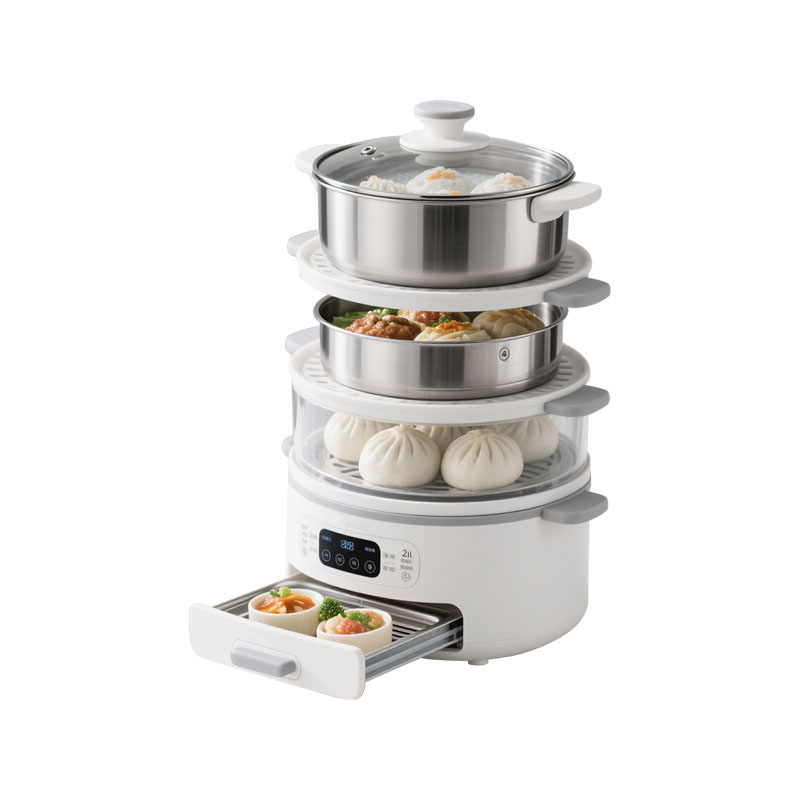 304 Stainless Steel Steamer Pot with Split Design and Smart ControlsEngineered for durability and even steam distribution, this stainless steamer resists corrosion and warping, making it a reliable choice for serious home cooks and small foodservice operations that need consistent performance.View Product →
A 304 stainless steel steamer pot conducts heat well, resists corrosion, and handles the high repeated temperatures of a busy kitchen or a sandwich shop. The 304 grade refers to the chromium-nickel alloy commonly specified for food contact surfaces; it does not react with acids, it does not flake, and it survives commercial dishwashers. This is the answer we recommend most often for serious home cooks and small foodservice operations because it does not warp, the lid seals tightly, and the tray is simple to replace if it takes damage. Stainless is also the material that wholesalers usually request first when they order steamer pots for resale, because end consumers understand its durability.
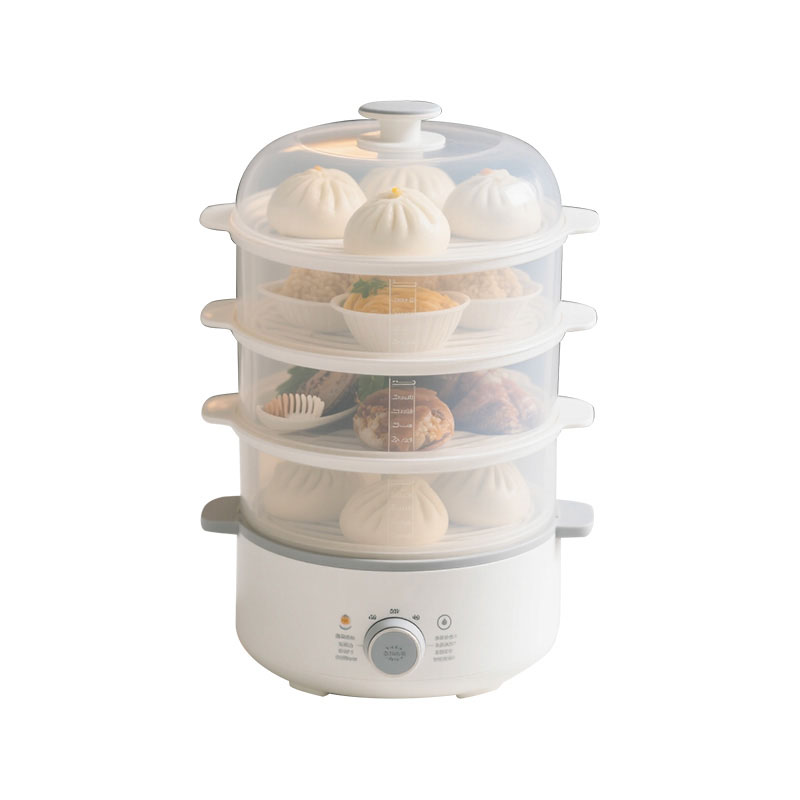 Plastic Multifunctional Steamer Pot with Rapid Steam HeatingA lightweight and affordable entry point for households, this steamer heats quickly and allows mid-cooking water refills. It suits casual use but requires more frequent water checks due to lower heat tolerance.View Product →
For home use, a plastic multifunctional steamer pot is light, affordable, and easy to store. The word multifunctional matters: the same pot that steams a dozen eggs can also warm dumplings, vegetables, tamales, or custards. Food-grade plastic versions are built with resin approved for food contact, and they pass the same heat resistance standards as other kitchen plastics. If you are buying for a household that lacks a dedicated steamer, this is the practical entry point. The trade-off is longevity and heat tolerance: plastic does not hold up to direct high heat as well as metal, so the water level must be checked more often.
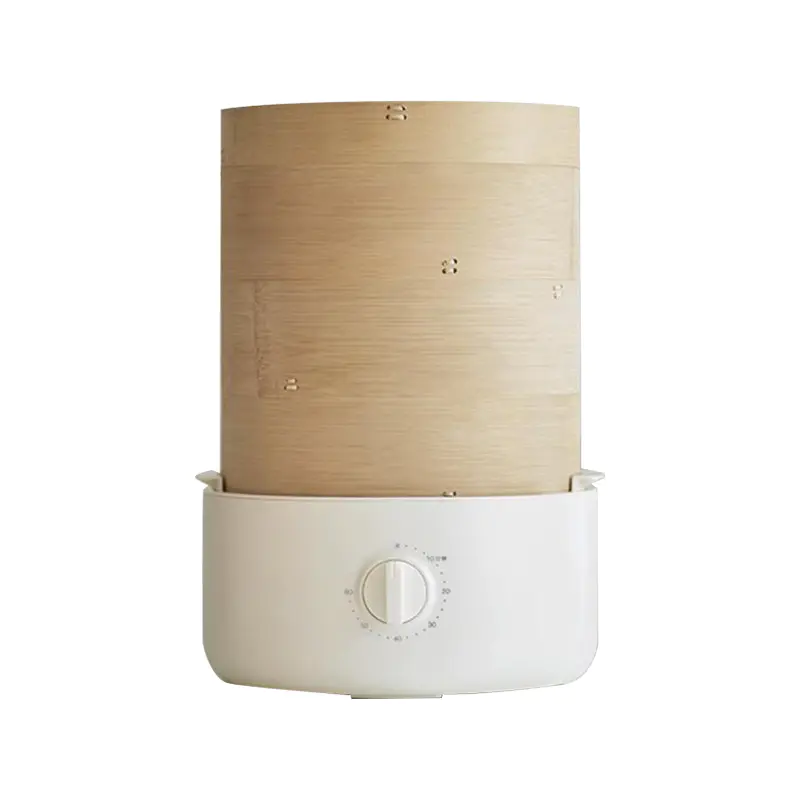 Handmade Woven Bamboo Steamer Pot for Gentle Moist SteamUsing natural bamboo that absorbs and slowly releases condensation, this steamer is ideal for delicate foods like eggs. Its gentle steam reduces cracking, and it suits home kitchens that can air-dry it after use.View Product →
Bamboo steamers are not only for dumplings. A handmade woven bamboo steamer pot creates a gentle steam because the bamboo fibers absorb condensation and release it slowly, which softens the thermal attack on an eggshell. Many pastry chefs prefer bamboo for anything cooked in a fragile shell, including eggs, because it further reduces the chance of cracking. The maintenance requirement is different: bamboo must be dried thoroughly after each use and occasionally washed with mild soap, so it is better suited to the home kitchen than to a commercial dishwasher environment.
When you evaluate a steamer for eggs, check four things. First, the lid must be heavy enough to keep a seal while the water boils. Second, the water tray should be deep enough to hold 20 minutes of boiling without refilling. Third, the steamer tray should have openings wide enough to let steam pass while keeping whole eggs from falling through. Fourth, the base must be stable under the weight of both water and a full batch of eggs; a flimsy base is the most common cause of accidents with light steamer pots.
Hard boiled eggs have moved beyond the breakfast plate. Convenience stores sell egg cups, salad bars buy pre-peeled eggs by weight, and meal-prep kitchens cook hundreds of eggs per shift. That demand has turned steamer pots and egg cookers into a meaningful import category for wholesalers, distributors, and private label brands.
If you are sourcing steamer pots as a supplier or buyer, the geometry that makes perfect hard boiled eggs at home is the same geometry you should verify on the factory line. The water pan must be wide enough to keep the center of the pot boiling, the tray should lift out for cleaning, and the materials should tolerate repeated heating cycles. Importers should ask the manufacturer for the exact stainless steel grade or the food-contact certificate for the plastic grade before approving a sample. A quick way to test a sample is to cook 12 eggs in it during receiving inspection; if the batch shows cracked shells or uneven yolks, the steam distribution is not correct.
The same logic applies inside the factory. A kitchen appliance manufacturer that builds its own steamers, controls its own molding, and tests lids on every unit can deliver a much more consistent product than one that simply assembles components. Overseas buyers also need to know realistic lead times; steamer pots in this category typically ship in 30 to 60 days depending on order volume, and one manufacturer in this sector has documented an average of 45 days, which is a useful planning figure for a retail or wholesale launch.
| Material | Durability | Heat performance | Cleaning | Ideal context |
|---|---|---|---|---|
| 304 stainless steel | High; resists corrosion and dents | Excellent; even base heating | Dishwasher-safe | Commercial kitchens, premium retail |
| Food-grade plastic | Medium; keep away from open flame | Good; heats quickly | Easy and lightweight | Budget retail, home use |
| Handmade bamboo | Medium; needs drying after use | Gentle, even steam | Hand wash only | Traditional steaming, specialty retail |
Private label buyers should also think about packaging. Steamer pots with glass lids have strong retail appeal but break more often in transit; a transparent plastic lid is safer for e-commerce. If you are planning an OEM program, ask the manufacturer whether custom tray heights and multi-tier stacking are available. That flexibility allows you to market the same pot for eggs, vegetables, and dim sum, which expands the product line without adding a new SKU.
A perfect hard boiled egg is only safe if the cold chain is respected. Hard boiled eggs should be refrigerated within 2 hours of cooking, whether they are peeled or still in the shell. If you cook more than you need, follow these storage guidelines to avoid waste and prevent spoilage.
When you prepare hard boiled eggs for sale, the ice bath is also a food safety control point. Public health regulations in most regions require cooked eggs to be cooled from 135°F to 70°F within 2 hours and then to 41°F or below within 4 more hours. The 5-minute ice bath followed by immediate refrigeration easily meets this requirement for batches of up to about 60 eggs. For larger batches, spread the eggs on a sheet pan and place them in a blast chiller or in alternating ice baths until the center of the yolk is cold.
Reheating a hard boiled egg is rarely necessary, but if you serve them warm, steam them for 2 to 3 minutes instead of microwaving. Microwaving eggs in the shell is dangerous; steam pressure can build up and cause the egg to explode even after it is removed from the microwave.
Steam refrigerated large eggs for 12 minutes in a covered pot with about 1 inch of water, then transfer them to an ice water bath for 5 minutes. Steaming keeps the temperature at a steady 212°F (100°C) and prevents the overcooking that causes green yolks and rubbery whites.
For large eggs straight from the refrigerator, steam for 6 minutes for soft yolks, 8 minutes for jammy yolks, 10 minutes for a moist set, and 12 minutes for fully hard yolks. Adjust by one minute for medium or extra-large eggs and by 30 to 60 seconds at high altitude.
The green ring is ferrous sulfide, formed when iron from the yolk reacts with sulfur compounds in the white at high temperatures. It appears when eggs are cooked too long or cooled too slowly. An ice bath immediately after steaming prevents it.
Steaming is more consistent. The eggs do not bump against the pot, the heat is uniform on all sides, and the shells peel more easily after an ice bath. Boiling works too, but water agitation and direct contact with the hot pot bottom create more variation in texture and cracking.
Use eggs that are 7 to 14 days old, cool them in ice water for 5 minutes, tap the wide end where the air pocket is, roll the egg gently to crack the whole shell, and peel under running water. Peeling from the wide end releases the membrane first.
Yes. A steamer pot with a tray is ideal because it holds the eggs above the water in a single layer, allows steam to wrap around every side, and prevents the cracking caused by contact with the hot pot floor. Both stainless steel and food-grade plastic steamer pots work well for this purpose.
Unpeeled hard boiled eggs can be refrigerated for up to 7 days. Peeled eggs should be kept in a sealed container, preferably in cold water that is changed daily, and used within 2 to 3 days.
Yes. The green ring is a harmless chemical reaction, not a sign of spoilage. However, it is also an indication of overcooking, which produces a chalky, less pleasant texture. Use the shorter cooking time and an ice bath to keep the yolk bright yellow.
Yes. As an egg ages in the refrigerator, it loses carbon dioxide through the shell and the pH of the white rises. This weakens the bond between the membrane and the shell. Eggs that are 7 to 14 days old are the best candidates for easy peeling.
Follow our social media to learn more about our updates


+86-13805815092

No. 11 Beihai Road, Xinqi Street, Beilun District, Ningbo City, Zhejiang Province, China
