


 中文简体
中文简体 English
 한국어
한국어 日本語
日本語 русский
 Español
 عربى
عربىIndustry News
Home / News / Industry News / Arabica Coffee Guide: Origins, Flavor, Brewing Tips and Machine Selection
Sep 01, 2026
Content
Ask a cafe owner why the house espresso costs more than the diner refill down the street, and the answer usually starts with one word: arabica. Coffea arabica is the most widely traded and most carefully graded coffee species in the world, responsible for roughly 55 to 60 percent of global green coffee production and for nearly everything the specialty market sells. Its beans carry more natural sugars and aromatic oils and less caffeine than the other commercial species, which is why arabica cups taste sweeter, softer, and more floral, while its highland farms, careful hand picking, and disease sensitivity explain the higher price tag.
This guide explains what arabica actually is, how it differs from Robusta at the chemistry level, which varieties deserve attention, and how growing conditions and processing shape what ends up in the cup. It then moves into practical territory: brewing parameters by method, how to match arabica beans to drip filter and hand-brew machines, what wholesalers and brand owners should check when selecting an equipment supplier, and how to store both beans and machines so the flavor survives the journey from farm to cup.
Arabica is the benchmark species of specialty coffee, and understanding its botany, flavor structure, and brewing behavior is the foundation for choosing better beans and better machines.
Arabica, known scientifically as Coffea arabica, is a flowering plant in the Rubiaceae family and is widely believed to be the first coffee species humans cultivated. Its wild home is the highland forest of southwestern Ethiopia, where the majority of the species' genetic diversity still grows today. Botanically, arabica is unusual: it carries 44 chromosomes instead of the 22 found in most coffee relatives, which makes it self-pollinating and keeps its flavor profile remarkably stable from one generation of seed to the next. That stability helped farmers spread a handful of lineages across the world, but it also left the species with a narrow gene pool that modern breeders are still working to widen.
In the field, arabica grows as an evergreen shrub or small tree, usually kept between two and four meters tall for easy picking. It produces white, jasmine-scented flowers, and its fruit, called cherries, take seven to nine months to ripen. Because cherries on the same branch mature unevenly, quality-focused farms still pick them by hand, several passes per season. The plant prefers altitudes between roughly 900 and 2,200 meters, grows best at 15 to 24 degrees Celsius, and has no tolerance for frost. The bean itself is easy to recognize once you know what to look for: oval in outline, with a curved, S-shaped crease down the center that separates it from the rounder, straighter-creased Robusta bean.
The species' journey out of Ethiopia reads like a supply-chain case study written centuries early. Coffee drinking reached Yemen by the fifteenth century, and the port of Mocha turned arabica into an international commodity. Dutch traders carried seed to Java in the late seventeenth century, and a single plant sent from Amsterdam to Paris in 1714 became the ancestor of much of Latin America's coffee. By 1727, seed had reached Brazil, which today grows more arabica than any other country. Two lineages, Typica and Bourbon, seeded the majority of those early plantations, which is why so many modern varieties still trace back to them.
What ultimately separates arabica in the cup is chemistry. Its beans contain roughly double the lipid content of Robusta and noticeably more sucrose, while carrying only about half the caffeine. Caffeine tastes bitter and defends the plant against insects, so Robusta's higher caffeine is a survival trait; arabica's lower caffeine is a flavor luxury it could only afford in milder highland climates with fewer pests. Lower caffeine, more sugars, and more oils add up to a cup built for sweetness, aroma, and the delicate fruit and floral notes that coffee grading systems reward.
Arabica is a self-pollinating highland species with an oval, S-creased bean whose sugar-and-oil chemistry explains why the specialty coffee world is built around it.
Only two coffee species matter at commercial scale: arabica and Robusta, whose botanical name is Coffea canephora. The short version of the comparison is this: arabica wins on flavor complexity, Robusta wins on cost, caffeine, and growing ease, and most of the coffee on the market is either one or a blend of both. The table below sets the two species side by side on the attributes that actually influence purchasing and brewing decisions.
| Attribute | Arabica (Coffea arabica) | Robusta (Coffea canephora) |
|---|---|---|
| Share of world production | About 55-60% | About 40-45% |
| Typical growing altitude | 900-2,200 m | 0-800 m |
| Comfortable temperature | 15-24 degrees C | 22-30 degrees C |
| Caffeine, dry weight | About 1.2-1.5% | About 2.2-2.7% |
| Sugars and lipids | Higher, with roughly double the lipids | Lower |
| Cup profile | Sweet, floral, bright acidity | Bitter, earthy, woody, heavy body |
| Disease resistance | Weaker, prone to leaf rust | Stronger, hardier plant |
| Market role | Specialty, single origin, premium blends | Instant coffee, espresso crema, cost-driven blends |
Read the table as a set of trade-offs rather than a ranking. Growing arabica at altitude costs more: farms sit on steep slopes, yields per hectare are lower, and hand picking is labor-intensive, all of which feed into the price premium. Robusta's toughness and yield make it the backbone of instant coffee and the crema-friendly component in many espresso blends. Note also that a 100 percent arabica label is a species statement, not a quality certificate; a poorly stored arabica lot can lose a cupping session to a fresh, well-processed Robusta. Quality lives in the details of cultivation, processing, and roasting, which is why cupping scores above 80 points remain the practical threshold for specialty coffee.
Arabica buys sweetness and aroma at a higher farming cost, while Robusta buys volume, body, and caffeine at a lower one, so the blend decision should start with the cup you need.
Two numbers frame every arabica sourcing conversation: how much of the world's coffee the species produces, and how concentrated that production is. The answer explains why arabica prices swing with Brazilian weather and why Robusta keeps gaining shelf space whenever arabica gets expensive. The chart and the notes below turn those numbers into practical buying guidance.
Before selecting beans or machines, it helps to see where arabica stands in the worldwide trade. Coffee grows across the tropical bean belt, but the two commercial species do not share that map equally. The donut chart below compares the approximate share of global green coffee production held by arabica and by Robusta. The exact figures move a few points each year as frost, drought, and replanting cycles reshape harvests. The overall balance, however, has held steady for decades, and that balance shapes how coffee is priced, graded, and sourced.
Arabica: about 57% Robusta: about 43%
Arabica's share sits at roughly 55 to 60 percent of world output in most seasons, which the chart rounds to about 57 percent. Brazil alone accounts for the largest slice of that volume, harvesting on the order of a third of the world's arabica in strong years. Colombia follows with washed milds prized for balance and consistency. Ethiopia contributes lots built on unmatched genetic diversity, and Honduras, Peru, and Guatemala add steady volumes that support both blends and single origins. On the other side of the chart, Vietnam anchors Robusta production, joined by Brazil's own robusta output and producers across Southeast Asia and West Africa.
For buyers, that split has direct commercial consequences. Arabica sets the reference price on international futures markets, so a July frost in Brazil or a poor flowering season can move prices within days. When arabica climbs, roasters substitute Robusta in blends, which is exactly the elasticity the 43 percent side of the chart represents. Climate pressure keeps pushing viable arabica land further uphill, tightening supply and adding a premium to high-altitude lots. Leaf rust outbreaks, including the Central American epidemic of the early 2010s, showed how quickly disease can cut a harvest short. Professional wholesalers respond by diversifying origins, signing longer-term supply agreements, and grading every lot with cupping scores instead of trusting origin names. Equipment demand follows the same curve, because as arabica-focused brewing spreads through cafes, offices, and households, manufacturers expand their drip filter and hand-brew machine lines to keep up. That is why production share is not trivia: it sets your price risk, your substitution options, and your product roadmap. Read the chart each season, and it will tell you when to contract beans early and which machines your customers will ask for next.
Arabica's market majority is fragile: weather and disease can swing supply within a single harvest, so buyers who lock in quality agreements early protect both price and flavor.
Not all arabica tastes alike, and the differences trace mostly to variety. Breeders group arabica into four broad families: Ethiopian landraces descended directly from wild forest populations; the Bourbon and Typica group that conquered the world through early plantings; introgressed varieties such as Catimor and Sarchimor that borrowed leaf-rust resistance genes from the Timor Hybrid; and modern F1 hybrids bred for both quality and climate resilience. The cards below summarize the varieties buyers encounter most often on origin labels and cupping sheets.
Founding lineage
Clean, balanced sweetness with soft acidity. Low yielding but treasured in older plots across Latin America, Asia, and the Pacific.
Founding lineage
Sweet and buttery with gentle fruit. Yields roughly 20 to 30 percent more than Typica; widespread in Central America, Rwanda, and Burundi.
Bourbon mutation
Compact plant that allows dense planting and easier picking. Bright acidity; a dependable workhorse in Brazil and Colombia.
Ethiopian landrace
Jasmine, bergamot, and tropical fruit. Sets record auction prices; demanding to grow and pick at its best.
Kenyan selection
Intense blackcurrant acidity with notable drought tolerance. A benchmark for top Kenyan lots.
Introgressed group
Leaf-rust resistant and high yielding. Cup quality depends heavily on farm management; good lots offer strong value.
Modern breeding
Crosses designed for rust resistance, drought tolerance, and cup quality; increasingly planted as climate pressure grows.
Treat variety as the ceiling, not the guarantee. A Gesha picked carelessly or dried too fast will lose to a well-run Caturra, and a Catimor managed by a skilled farmer can out-cup its reputation. Processing multiplies the effect: washed lots emphasize clarity and acidity, natural lots push berry and wine-like sweetness, and honey lots sit between the two. When you request samples from a supplier, ask for variety, altitude, process, and harvest window together; those four fields explain most of what you will taste in the cup and give you a fair basis for comparing lots across origins.
Variety sets the flavor ceiling of an arabica lot, but harvesting, processing, and drying decide how close the cup actually gets to it.
Arabica rewards controlled, moderate extraction, and it punishes carelessness faster than Robusta does. Aim for water between 92 and 96 degrees Celsius, a medium grind for filter brewing, and a coffee-to-water ratio near 1:15 to 1:17 as a starting point. Under-extract and the cup turns sour and thin; over-extract and bitterness buries the florals you paid for. Grind immediately before brewing whenever possible, dose by weight rather than by scoop, and use filtered water, since chlorine and heavy mineral loads flatten aromatics.
The table below collects practical starting points for the five methods arabica drinkers use most. Adjust one variable at a time, and give each change two or three brews before judging it.
| Method | Grind size | Coffee to water | Water temperature | Typical brew time |
|---|---|---|---|---|
| Drip filter machine | Medium | 1:15 to 1:17 | 92-96 degrees C | 4-6 minutes |
| Pour over (hand brew) | Medium-fine | 1:15 to 1:16 | 92-96 degrees C | 2.5-4 minutes |
| Espresso | Fine | 1:2 by weight | 90-94 degrees C | 25-30 seconds |
| French press | Coarse | 1:14 to 1:15 | 93-96 degrees C | About 4 minutes |
| Cold brew | Extra coarse | 1:8 to 1:10 | Cold water | 12-18 hours |
If you are still deciding which machine family fits your counter and volume, the plain-language guide to what is a coffee machine walks through the main categories, from drip filter and hand-brew designs to espresso and combination models, and shows how each one treats the grounds differently.
Pour-over brewing is where single-origin arabica shows its clearest expression, because the slow, even saturation of the grounds highlights acidity and florals. The catch is that manual pouring is skill-dependent: bloom time, pour pattern, and flow rate vary from person to person. Automatic hand-brew machines solve that by standardizing the bloom and the spiral pour, which is why households and small cafes that serve light-roast arabica increasingly specify them for consistent, repeatable results.
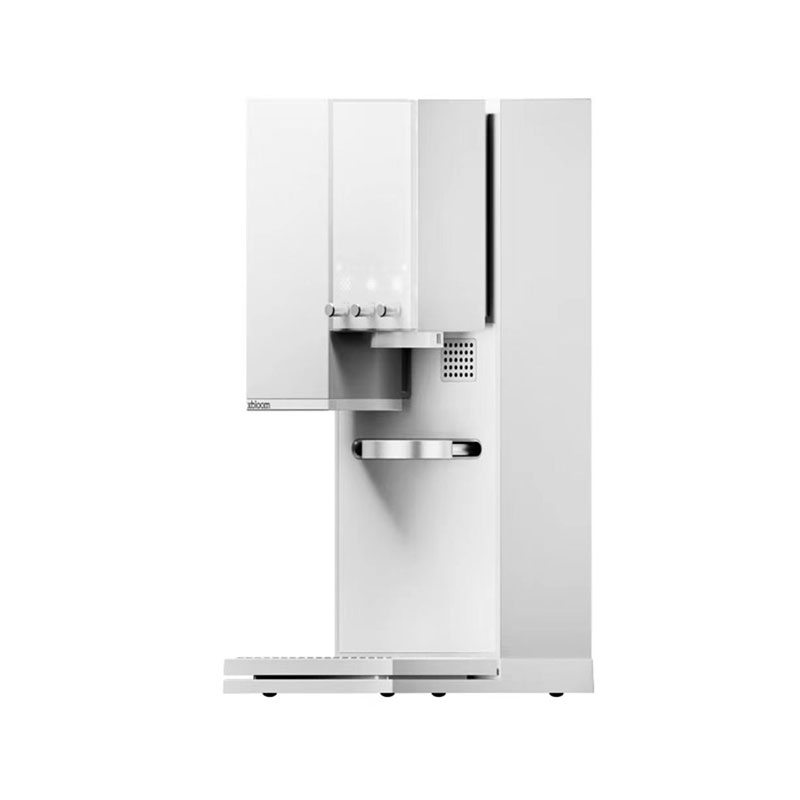 Household and Commercial Automatic Hand Brewed Coffee Machine1. One-click mode, 3-minute brewing. 2. Simple and stylish technology dot matrix display screen. 3. Creative mode, adjustable professional coffee. 4. Free mode, multif...View Product →
Drip filter machines remain the workhorse for offices, hotel breakfasts, and canteens, and modern large-capacity models hold temperature and flow steady across batch after batch of arabica. Two details matter for flavor: look for a well-designed shower head that wets the coffee bed evenly, and prefer a thermal carafe over a hotplate, since a hotplate keeps cooking the last third of the pot. Large-capacity multifunctional machines add scheduling and volume control, which helps any team that brews ahead of the morning rush.
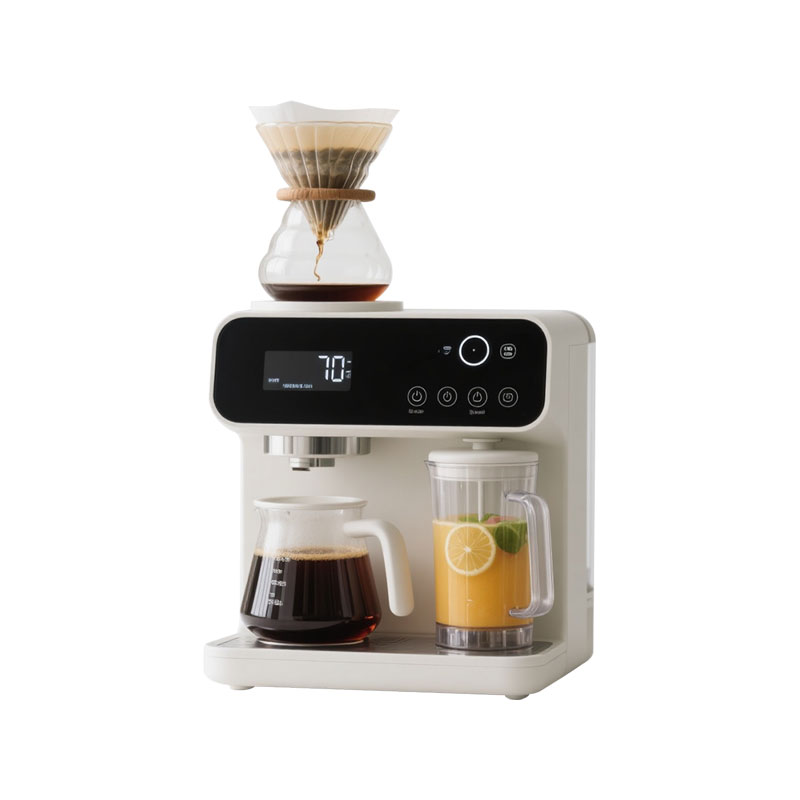 Large Capacity Drip Filter Multifunctional Coffee Machine1. High efficiency and large capacity: 1.8L transparent water tank, can brew 12 cups of coffee at once, commercial-grade flow pump can achieve rapid extraction in 5 mi...View Product →
Espresso treats arabica differently: finely ground coffee, roughly nine bars of pressure, a 1:2 ratio by weight, and 25 to 30 seconds of extraction. Freshly roasted arabica releases carbon dioxide that forms crema, so beans used too soon after roasting can pour foamy and hollow, while beans long past their peak pour flat. Many cafes run arabica-forward blends for espresso to combine sweetness with body, then adjust the grind daily as temperature and humidity shift.
For arabica, hold the water between 92 and 96 degrees Celsius, match the grind to the method, and keep ratios near 1:15 to 1:17, because parameter consistency protects flavor better than any single feature.
If you sell coffee or coffee equipment, the arabica conversation is ultimately a sourcing conversation, and it pays to evaluate beans and machines as one decision rather than two. A premium lot brewed on unstable equipment loses its edge, and a well-built machine cannot rescue stale or badly graded beans. The two checklists below cover the questions that separate professional buyers from hopeful ones.
When sourcing arabica beans
|
When selecting brewing equipment
|
This is also where the manufacturer behind the machine becomes part of the quality equation. Ningbo Victor Electrical Technology Co., Ltd., also referenced in industry listings as Victor Electric Appliance Technology Co., Ltd., is a kitchen appliance manufacturer founded in 2019 that develops its own coffee machine lines and supplies them worldwide under ODM and OEM programs. The company exports about 60 percent of its annual output with an average delivery time of roughly 45 days, and it documents the production lines, testing processes, and quality-control systems behind those numbers on its manufacturing page.
Vertical capability matters more than it first appears. A supplier that runs its own magnesium-aluminum mold and component processing can hold tighter tolerances on boilers, filter baskets, and housings, and semi-solid component processing improves part strength and consistency. For a private-label arabica program, that integration shortens communication loops, protects temperature stability inside the machine, and makes customizations, from plug types to housing finishes, faster to execute.
Evaluate beans and machines as one supply decision: a premium arabica program needs documented bean quality plus a manufacturer whose temperature control, materials, and ODM/OEM support can protect it.
Arabica is perishable in both of its working forms: the bean and the machine that brews it. Whole beans hold their peak aroma for roughly two to four weeks after the roast date, and ground coffee fades many times faster. Store beans in an airtight container with a one-way valve, in a cool, dark cupboard, and grind only what you brew. Skip the refrigerator: every trip in and out causes condensation that stales the oils on the bean surface.
Machines drift too, just more slowly. Scale from hard water insulates heating elements and shifts brew temperature, and a machine running even a few degrees low will flatten arabica's acidity and emphasize its bitterness. Coffee oils go rancid in baskets and carafes and quietly dull every subsequent batch. A simple rhythm keeps both problems away:
Design choices either support that rhythm or fight it. Machines with removable brew baskets, wide-mouth carafes, and accessible water tanks cut cleaning time in busy kitchens, and easy-to-clean multifunctional models reduce the labor cost that quietly erodes margins in offices and small cafes. When you compare machines from a supplier, ask to see the disassembly process; a two-minute teardown beats a thirty-minute one every shift of the week.
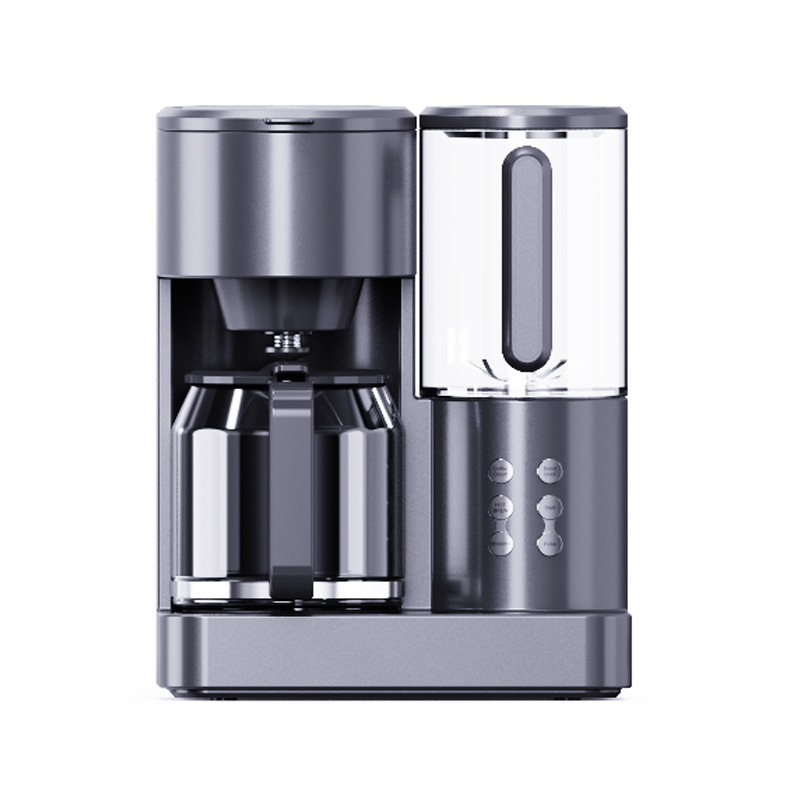 Multi Functional Coffee Machine Easy To Clean1. Multi-functional combination, simple and compact. 2. Heating and stirring an independent dual system. 3. Coffee and smoothies can be made simultaneously. 4.3 adjust...View Product →
One final habit ties storage and maintenance together: taste test on a fixed schedule. Brew the same arabica lot on the same machine every week and record the result. When the cup drifts, the log tells you whether the beans aged, the water changed, or the machine needs descaling, so you correct the actual cause instead of guessing.
Store arabica beans airtight and off the fridge shelf, descale on a fixed schedule, and both the bean and the machine will keep delivering the flavor you specified.
These are the questions buyers, cafe operators, and serious home brewers ask most often about arabica, answered in short form for quick reference.
Is arabica always better than Robusta?No. Species sets tendencies, not guarantees. Arabica leans sweeter and more aromatic, but a fresh, well-processed Robusta can outperform a stale or carelessly handled arabica lot. Judge coffee by cupping score, roast freshness, and storage, and treat species as one input among several. |
Why does arabica coffee cost more?It grows at high altitude on steep terrain, yields less per hectare, must be picked by hand because its cherries ripen unevenly, and is more vulnerable to disease and frost. Lower caffeine also means less natural pest resistance. Each of those factors adds cost that Robusta farming avoids. |
What roast level suits arabica best?Light to medium roasts preserve the florals, fruit, and bright acidity that define quality arabica. Medium roasts balance sweetness and body for filter brewing, while darker roasts trade origin character for body and bitter-sweetness, which some espresso drinkers prefer. Roast date matters more than roast level. |
Can I brew arabica in any coffee machine?Yes, as long as the grind matches the method and the machine holds temperature. Drip filter and hand-brew machines want a medium grind and water between 92 and 96 degrees Celsius; espresso machines want a fine grind and daily grind adjustment. A machine that runs cool will make even excellent arabica taste sour. |
What should a wholesaler check before ordering arabica brewing machines from a manufacturer?Start with brewing temperature accuracy and stability, then capacity, food-contact materials, and compliance certifications for your destination market. Confirm ODM/OEM customization options such as logo, voltage, plug type, and packaging, and ask about in-house mold and parts processing, average lead time, and spare-parts support. |
Does a 100 percent arabica label guarantee quality?No. The label states the species, nothing more. Quality depends on cultivation altitude, variety, harvesting, processing, sorting, roasting, and how recently the beans were roasted. Ask suppliers for cupping scores and harvest or roast dates, and verify with a sample before committing to volume. |
When an arabica question has no obvious answer, bring it back to two anchors: how the lot was grown and processed, and whether the equipment can hold stable brewing parameters.
The pages below lead to the Victor Electric site areas most relevant to this guide, from the full product catalog to the manufacturing systems and the growing library of appliance explainers.
| Company overview, factory honors, and the full product catalog. |
Manufacturing and quality control Production lines, testing equipment, and process systems. |
| The latest company updates and industry articles. | Explainers on coffee machines, smokeless grills, waffle makers, and more. |
| Announcements, milestones, and site updates. | Background on Ningbo Victor Electrical Technology Co., Ltd. and its multilingual platform. |
From bean fundamentals to ODM/OEM manufacturing detail, these resources turn the arabica knowledge above into concrete sourcing and product steps.
Follow our social media to learn more about our updates


+86-13805815092

No. 11 Beihai Road, Xinqi Street, Beilun District, Ningbo City, Zhejiang Province, China
