A glass air fryer is a countertop cooking appliance that uses a heating element and a fan to circulate hot air around food placed inside a transparent, heat-resistant glass container, producing a crisp exterior similar to frying while using little or no added oil. The glass container allows the cook to observe the food during the cooking process, which is one of the main differences between a glass air fryer and a traditional air fryer built with an opaque plastic or metal basket. This article looks at how a glass air fryer works, the materials involved, and practical specifications drawn from a compact multi-function glass air fryer system produced by Ningbo Victor Electrical Technology Co., Ltd.
A glass air fryer operates on the same basic principle as other air fryers: a heating element warms the air inside the cooking chamber, and a fan circulates this hot air rapidly around the food. This continuous airflow removes moisture from the surface of the food and produces a browned, crisp texture, a cooking method generally described as convection cooking. The main functional distinction of a glass air fryer lies in the container material. Instead of an opaque basket, the food sits inside a heat-resistant glass bowl, which is typically made from high borosilicate glass chosen for its ability to withstand rapid temperature changes without cracking.
Because the container is transparent, users can visually monitor the cooking process without opening the unit and interrupting the airflow, which supports more consistent results for foods that require closer visual attention, such as baked goods or foods that brown quickly. This visible cooking feature is one of the reasons transparent air fryer designs have drawn interest among households that want more control and feedback during cooking.
Is a Glass Air Fryer Safe
The safety of a glass air fryer depends largely on the type of glass used in its construction. High borosilicate glass is a food-grade material commonly used in laboratory and kitchen equipment because of its resistance to thermal shock, meaning it can tolerate the rapid heating and cooling cycles involved in air frying without a high risk of shattering. This material is generally recognized as non-toxic and odorless, which supports its use as a food-contact surface during cooking.
In addition to the container material, other design features contribute to overall safety during use. Heat-resistant feet allow a unit to be placed directly on countertop surfaces such as granite, quartz, or marble without transferring excessive heat to the surface below. A leak-proof lid design also reduces the risk of spills when a container is removed from the unit after cooking, which is a practical consideration for households transporting cooked food, for example to a workplace or on a short trip.
Glass Air Fryer Versus Non-Stick Air Fryer
Households evaluating a glass air fryer often compare it against a traditional non-stick basket air fryer. Both designs use the same underlying convection cooking method, so the difference in outcome is generally limited to material properties and visibility rather than the cooking process itself. A glass container allows direct visual monitoring of the food and, because glass is a non-porous material, it does not rely on a non-stick coating that can wear down with repeated use over time. A non-stick basket, in comparison, offers an opaque cooking chamber but may be lighter in weight in some designs.
Table 1: General comparison between glass and non-stick air fryer containers
Feature
Glass Container
Non-Stick Basket
Visibility during cooking
Visible
Not visible
Coating wear over time
Not applicable
Possible over extended use
Dishwasher compatibility
Commonly dishwasher safe
Varies by product
Product Overview: Compact 4-in-1 Glass Air Fryer System
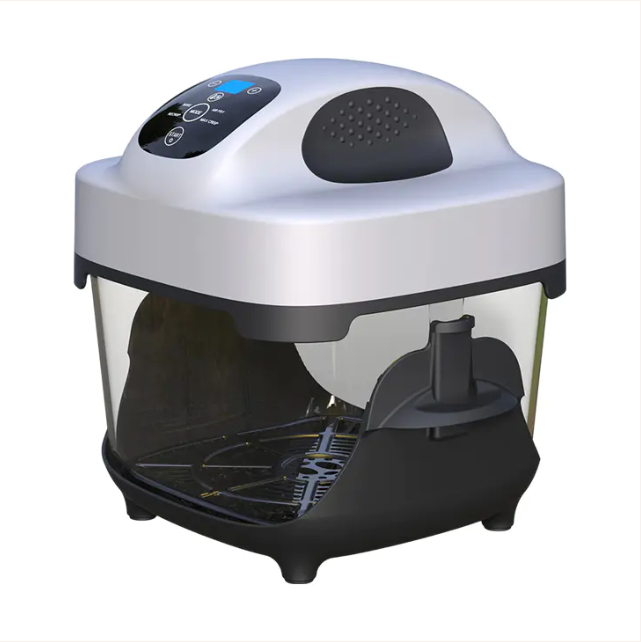
Ningbo Victor Electrical Technology Co., Ltd. produces a compact glass air fryer system built around a central PowerPod main unit paired with interchangeable glass containers of different sizes. The system supports four cooking functions, including max crisp, baking, air frying, and re-crisping, allowing a single unit to serve multiple roles in daily cooking. The containers are made from high borosilicate glass, described by the company as food-grade, non-toxic, and odorless.
The image above shows the PowerPod main unit positioned over a transparent glass cooking container, with the internal heating coil and fan mechanism visible through the glass. The compact rounded housing sits above a wide glass bowl, and heat-resistant feet are positioned at the base of the unit to support stable placement on a countertop. The overall footprint is designed to remain manageable for smaller kitchen spaces while still accommodating a full-sized cooking container underneath the main unit.
According to the manufacturer specification, the system operates at 1500W and is available in voltage configurations of 120Vac 60Hz or 220 to 240Vac 50Hz, supporting use across different regional electrical standards. The unit measures 340 by 305 by 345 millimeters in its assembled form. A key design feature is that the PowerPod and its glass containers can be nested together for storage, reducing the amount of cabinet space required when the appliance is not in use.
Container Capacity Comparison
The compact glass air fryer system is offered with three interchangeable container sizes, allowing a household to select a container appropriate to the size of a meal being prepared. The chart below sets out the volume of each available container in liters, based on the manufacturer specification sheet.
As shown in the chart, the largest container holds 6 liters, equivalent to 6.34 quarts, which is suited to preparing larger portions or cooking for multiple people at once. The mid-sized container holds 4 liters, equivalent to 4.23 quarts, offering a balance between capacity and countertop footprint for everyday meals. The smallest container holds 2.3 liters, equivalent to 2.43 quarts, which is more appropriate for single servings or smaller side dishes. Because these containers are designed to be interchangeable with the same PowerPod main unit, a household can select the container that matches a specific meal rather than always using a single fixed basket size. This tiered capacity structure is one of the practical distinctions of a multi-container glass air fryer system compared with a fixed single-basket air fryer design.
Component Weight Comparison
Weight is a relevant consideration for a countertop appliance, particularly for households that may move the unit between storage and the countertop on a regular basis. The following chart presents the net weight of the PowerPod main unit and each glass container set, based on the manufacturer specification sheet.
The PowerPod main unit itself weighs 1.5 kilograms, which is relatively light given that it houses the heating element, fan, and control panel. The 6.34 quart glass container set is the heaviest individual component at 2.6 kilograms, reflecting the thicker glass construction needed for the largest container. The 4.23 quart set weighs 1.9 kilograms and the 2.43 quart set weighs 1.0 kilogram, following a broadly proportional relationship between container volume and weight. A full set combining the PowerPod with all three container options reaches a total net weight of approximately 7.0 kilograms. This distribution of weight across components is a relevant factor for retailers and distributors assessing shipping and handling considerations for this product category.
Packaging and Container Loading Data
For distributors and buyers evaluating shipping logistics, the manufacturer specification sheet also provides container loading figures for standard shipping containers. The unit carton size is listed as 360 by 375 by 330 millimeters, with one unit packed per carton. The chart below shows the number of units that can be loaded into different standard shipping container types.
Based on the specification data, a standard 20-foot container can hold 672 units, while a standard 40-foot container can hold 1386 units. A 40-foot high-cube container, which offers additional internal height compared with a standard 40-foot container, can hold up to 1584 units. This progression reflects the additional usable volume available in larger container formats, and it provides a reference point for distributors planning shipment volumes and inventory scheduling for this product line. These figures are drawn directly from the manufacturer packaging specification rather than estimated.
Full Product Specification
The table below summarizes the complete specification of the compact 4-in-1 glass air fryer system, model WT-AF201, as provided by the manufacturer.
Table 2: Specification summary for the WT-AF201 compact glass air fryer system
Item
Specification
Product name
Multifunctional air fryer
Model
WT-AF201
Voltage
120Vac 60Hz / 220 to 240Vac 50Hz
Power
1500W
Product size
340 x 305 x 345 mm
Container options
6.34 qt (6 L), 4.23 qt (4 L), 2.43 qt (2.3 L)
Full set net weight
7.0 kg
Full set gross weight
8.5 kg
Unit carton size
360 x 375 x 330 mm
Practical Features for Daily Use
Beyond core specifications, several design features support day-to-day use of a compact glass air fryer system. The following list summarizes the main practical features included in this product line.
Support for four cooking functions in one system: max crisp, baking, air frying, and re-crisping.
High borosilicate glass containers described as food-grade, non-toxic, and odorless.
Fixed heat-resistant feet suited for placement on granite, quartz, or marble countertops.
Leak-proof sealing lids that support direct transport of cooked food after use.
Nestable storage design that allows the main unit and containers to be stored together.
Dishwasher-safe containers, trays, adapters, and covers for simplified cleaning.
Company Background
Ningbo Victor Electrical Technology Co., Ltd. specializes in the research, development, and manufacturing of kitchen appliances, with a stated focus on delivering convenient, efficient, and intelligent solutions for modern households. Since its establishment in 2019, the company has concentrated on product innovation and expansion across several kitchen appliance segments, including coffee machines, waffle makers, smokeless grill pans, and steam cookers.
With a growing portfolio of self-developed models, the company states that it has built an expanding product lineup and presence in international markets. Guided by values described as integrity, responsibility, and win-win collaboration, Ningbo Victor continues to develop its manufacturing foundation, quality control processes, and automation capabilities to support its kitchen appliance product lines, including the compact glass air fryer system detailed in this article.
Frequently Asked Questions
Q1: Is a glass air fryer safe to use?
A1: Glass air fryers that use high borosilicate glass are generally designed to withstand rapid temperature changes, and this material is commonly recognized as food-grade and non-toxic for cooking use.
Q2: What is the difference between a glass air fryer and a regular air fryer?
A2: The main difference is the cooking chamber material. A glass air fryer uses a transparent heat-resistant glass container, allowing visible cooking, while a regular air fryer typically uses an opaque non-stick basket.
Q3: Can glass air fryer containers go in the dishwasher?
A3: In this product line, all containers, baking trays, adapters, and covers are described by the manufacturer as dishwasher safe.
Q4: Is heat-resistant glass suitable for placing directly on a countertop?
A4: This unit includes fixed heat-insulation feet, which are designed to allow safe placement on countertop materials such as granite, quartz, and marble without transferring excessive heat to the surface.
Q5: How many container sizes are available for this glass air fryer system?
A5: The system offers three interchangeable container sizes: 6.34 quart (6 L), 4.23 quart (4 L), and 2.43 quart (2.3 L), which can be paired with the same PowerPod main unit.



 中文简体
中文简体 English
 한국어
한국어 日本語
日本語 русский
 Español
 عربى
عربى