


 中文简体
中文简体 English
 한국어
한국어 日本語
日本語 русский
 Español
 عربى
عربىIndustry News
Home / News / Industry News / Belgian Waffles Food: Sourcing Guide for Commercial Waffle Maker Buyers

Oct 05, 2026
Content
A hotel group's breakfast procurement team once sent a request that was almost comically short: 800 units, 220–240 V, grids deep enough for a 120 g batter pour, delivery inside three weeks. No recipe attached. No flour specification. That team understood something first-time buyers usually learn the hard way: in commercial Belgian waffles food production, the machine sets the ceiling on quality long before the recipe does. A shallow grid turns a Belgian waffle into a pancake with a pattern pressed into it. A slow heating element turns a crisp shell into a steamed centre. A hinge that drifts half a millimetre out of alignment produces one pale side and one scorched side, batch after batch, and no amount of recipe tuning will fix it.
This guide is written for the people who actually sign off on that purchase: brand owners, importers, channel buyers, product managers and private-label teams. It covers what Belgian waffles food genuinely demands from hardware, how the machines are built inside, which specifications to measure in a supplier's workshop, and where the silent costs hide. Victor Electric Appliance Technology Co., Ltd. (Ningbo Victor Electrical Technology Co., Ltd.) has been developing and manufacturing waffle makers since 2021 as part of a wider kitchen appliance line that also includes coffee machines, indoor smokeless grill pans and steamers, so the examples below come from production floor experience rather than catalogue copy.
If you only have time to check one thing on a sample machine, check the grid. A Belgian waffle grid is typically 16 mm to 18 mm deep, roughly double the depth of a standard American waffle grid at 8 mm to 10 mm. That difference is not decorative. The extra volume allows a 90 g to 130 g batter pour to expand upward without overflowing the edge, creates a taller pocket that holds steam long enough to set the interior structure, and keeps the outer surface in contact with the hot plate long enough to build a dry, crisp shell while the crumb stays open. When a brand tries to sell a "Belgian" waffle made on a shallow plate, the result is a dense, custard-like disc with a shallow imprint, and repeat purchase rates suffer within a single season.
Grid depth alone is not enough. Three further variables decide whether the machine can hold quality across a shift:
Buyers frequently ask for "a Belgian waffle maker" without realising that the two classic Belgian styles require different plate geometry, different temperature behaviour and different packaging. Brussels-style is the lighter, rectangular, deep-pocketed waffle most often served with powdered sugar, whipped cream, strawberries or chocolate sauce, and eaten with a knife and fork. Liège-style is denser, sweeter and irregular in outline, made from a brioche-like dough studded with pearl sugar that caramelises against the plate and creates a slightly crunchy, chewy exterior; it is normally eaten from the hand without toppings.
| Attribute | Brussels style | Liège style | Standard American waffle |
|---|---|---|---|
| Typical grid depth | 16–18 mm | 13–16 mm, often round or oval | 8–10 mm |
| Base mixture | Yeasted or whipped-egg batter | Dough with pearl sugar | Chemical-leavened batter |
| Sweetness | Light; sweetness comes from toppings | High; sugar is inside the dough | Medium to high |
| How it is served | Plated, with toppings, cutlery | Hand-held, often wrapped | Plated or frozen retail |
| Batter or dough weight | 90–130 g per waffle | 80–110 g per waffle | 60–90 g per waffle |
| Main hardware implication | Deep plates, strong heat recovery, good release | Plate surface that tolerates sugar caramelisation and cleans easily | Shallow plates, fast cycle times |
The practical consequence for a purchasing decision is straightforward. A Liège programme needs a plate coating that can survive repeated contact with molten sugar and a cleaning routine that removes caramel before it carbonises. A Brussels programme needs plate depth and heat recovery, because the batter is wetter and the pour is larger. Ordering one machine to cover both styles usually means compromising on one of them.
A waffle maker is a closed-loop thermal system. Two heating elements, one in the upper plate and one in the lower, are cycled by a thermostat. Inexpensive machines use a bimetallic thermostat with a wide dead band; better machines use an NTC thermistor with electronic control, holding the plate within roughly plus or minus 5 °C rather than plus or minus 15 °C. The visible result of a wide dead band is inconsistent browning: the first waffle after the ready light comes on is pale, the next one is dark, and operators start compensating by opening the lid at random moments. For a detailed walkthrough of the sequence from cold start to ready signal, the site's technical note on the working principle of a waffle maker breaks the cycle down step by step.
In a fixed-plate machine the batter simply sits in the lower grid and spreads under its own weight. When the lid closes, the batter is pushed outward from the centre, so the edges are often thinner and darker than the middle. Flipping and rotating mechanisms solve this mechanically. Turning the plates through 180 degrees lets gravity pull the batter into both grids evenly and produces a symmetric waffle with matched top and bottom browning. Vertical flip designs achieve the same result while taking less counter space, which matters in cafés with limited work surface. A rotating mechanism driven by a motor is the most repeatable option in high-volume service, because the operator does not have to remember to turn the machine at the right moment.
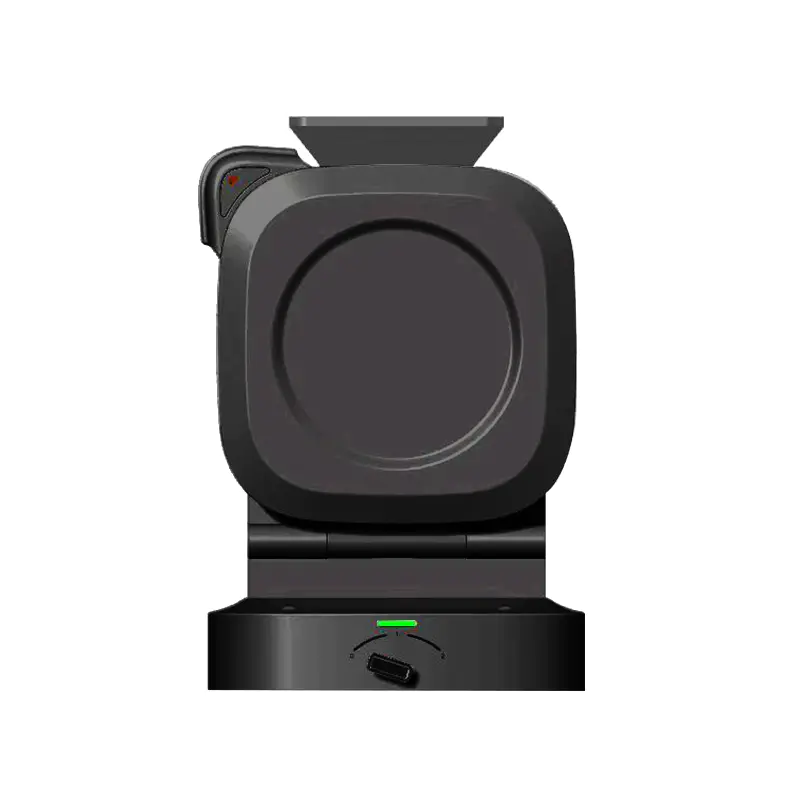 2 Sided Square Rotating Waffle MakerSimple appearance, stylish and generous. Vertical feeding, full and uniform. Edge sealing to prevent overflow and prevent liquid leakage. Two-level mediation, automati...View Product →
Machines in this class typically pair a two-sided square rotating assembly with a timer and a coated die-cast plate, and they are the format most often chosen for hotel breakfast lines and dessert counters where two or three waffles must be produced per minute during a rush.
Coatings are usually applied at 20 to 35 microns in two or three layers. Standard PTFE systems release cleanly and handle typical batter chemistry well. Ceramic and sol-gel coatings resist scratching better but can lose release performance sooner if operators use metal tongs. In both cases the failure mode is the same: once the coating begins to flake, batter sticks, the operator scrapes harder, and the plate degrades quickly. Removable plate designs change the maintenance economics entirely, because a worn plate can be replaced without scrapping the appliance.
Cycle time is the single figure that decides how many machines a location needs, and it varies far more between machine classes than buyers expect. The chart below shows typical bake cycles measured from a cold batter pour to a released waffle, based on a 110 g Brussels-style pour at a plate temperature of around 190 °C. Treat the values as planning ranges rather than fixed promises, because batter hydration, sugar content and starting plate temperature all shift the outcome.
Three things stand out from this distribution. First, the gap between the fastest and slowest class is more than double, which means the same breakfast demand can require two machines or five depending on the format selected. Second, the difference is not only about heating power; the rotating and flipping formats also reduce the dead time an operator spends waiting for the lid to be opened at the right moment, so labour efficiency improves alongside throughput. Third, the recovery interval between pours tends to widen faster on lighter machines, so a unit that looks adequate on paper at breakfast opening can fall behind by the peak of the service period. When planning capacity, it is safer to model the throughput of the fourth consecutive waffle rather than the first one, and to keep one standby machine on site for locations serving more than roughly 150 waffles per day.
Belgian waffles move through very different commercial channels, and each channel imposes its own equipment logic. Understanding which channel you are supplying is the fastest way to narrow a specification.
Industrial frozen waffle production runs on continuous tunnel ovens rather than hinged appliances. The priorities there are uniform bake profiles and rapid freezing, and the equipment purchase is a plant engineering project rather than an appliance order. This segment rarely overlaps with the tabletop machines discussed here, but it is worth stating clearly so that buyers do not confuse the two supply chains.
A hotel breakfast station needs machines that survive daily use by rotating staff with minimal training. That means clear ready indicators, timed bake cycles, plates that release reliably, and a design that can be wiped down quickly. Volume is moderate but continuous, so a rotating machine with strong heat recovery is usually the better choice than a fast machine that drifts in temperature.
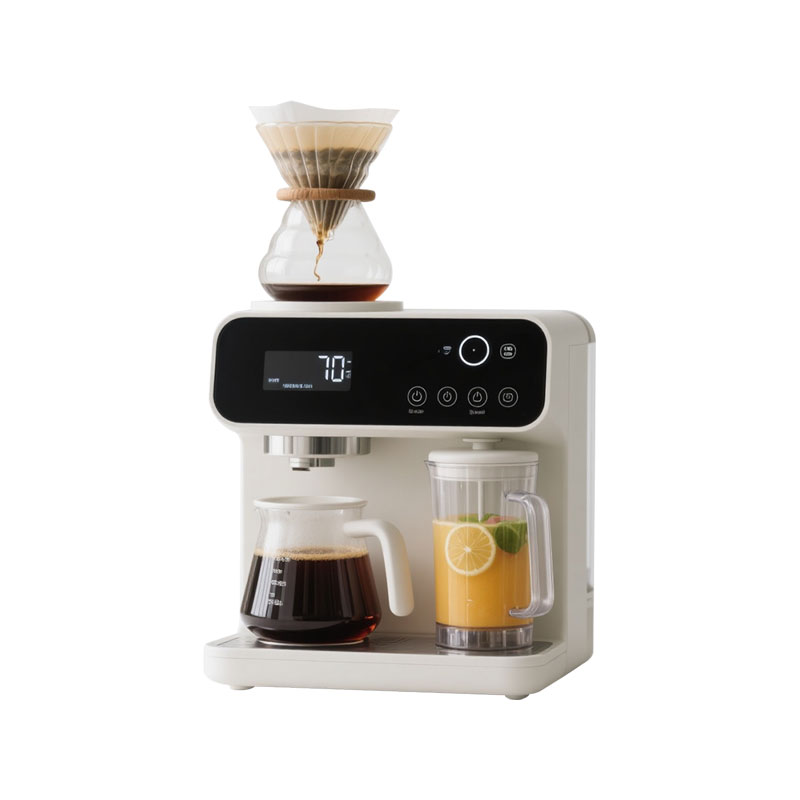 Large Capacity Drip Filter Multifunctional Coffee Machine1. High efficiency and large capacity: 1.8L transparent water tank, can brew 12 cups of coffee at once, commercial-grade flow pump can achieve rapid extraction in 5 mi...View Product →
Breakfast equipment is normally bought in clusters, and a waffle station almost always sits next to a coffee station. Buyers building a full buffet line often source a large-capacity drip filter coffee machine in the same order, which reduces shipping cost, simplifies the spare parts list and keeps the visual language of the counter consistent.
These operators live on peak-hour throughput. A kiosk selling hand-held Liège waffles needs a machine that runs continuously for two hours with fast turnarounds and easy caramel removal. A dessert café plating Brussels waffles needs consistent browning for photographic presentation and a machine whose top plate can be adjusted or replaced.
Suppliers of Belgian waffle premix and ready-to-pour batter have an unusual interest in hardware: their product performance is judged on equipment they do not control. A premix formulated for an 18 mm grid behaves differently on a 14 mm plate, and a batter that pours well at 185 °C can burn at 205 °C. Serious premix suppliers specify the machine parameters on the pack, and some provide machines alongside their mixes to lock in the intended result.
Once the specification is clear, supplier evaluation becomes the decisive step. Price differences between quotations of 20 to 30 percent are usually explained by plate material, thermostat type, coating thickness and whether the supplier controls its own tooling. The table below lists the checks that separate a stable long-term partner from an assembly-only trader.
| Check | What to look for | Why it matters commercially |
|---|---|---|
| Own tooling and die-casting | In-house mould making and magnesium-aluminium component processing | Tooling changes, plate geometry revisions and spare plate supply all stay under control instead of depending on a third party |
| Coating supply chain | Known coating brand, stated micron thickness, documented cure process | Determines release performance and the realistic service life of the appliance |
| In-line electrical testing | Hi-pot, earth continuity and leakage current checks on every unit | Reduces the risk of shipment rejection at destination customs or retail QC |
| Thermostat calibration | Recorded plate temperature at set point, with tolerance range | Consistent browning across a production lot and across seasons |
| Packaging and drop testing | ISTA-style carton testing, corner protection, accessory retention | Surface damage and bent hinges are among the most common warranty claims |
| Spare parts policy | Availability of plates, thermostats, knobs and feet for a defined period | Protects the brand's after-sales reputation in markets with long product life |
| Documented production process | Published manufacturing, testing and quality control procedures | Gives the buyer something concrete to audit rather than a verbal assurance |
Site visits matter more here than in most appliance categories, because the failure modes are physical. Ask to see the die-casting area, the coating line and the end-of-line test bench. Ask how the supplier measures plate flatness, and ask to see the gauge. A manufacturer with a real tooling shop will answer these questions in specific numbers; a trading company will answer in generalities. The company's manufacturing and quality control process is a useful starting reference point for what a properly documented production flow looks like, and it is worth comparing that flow with what you observe on site.
For buyers placing volume orders, three commercial questions are just as important as the technical ones: what is the realistic lead time for a repeat order, how much of the appliance is manufactured in-house versus outsourced, and what happens if a coating batch fails a salt-spray or adhesion test. Suppliers that answer all three without hesitation are usually the ones that keep delivery promises during peak season.
Most international buyers entering this category do not want an existing catalogue model with a new logo. They want a machine that fits their brand's position, their market's voltage and plug standard, and their packaging identity. That is an OEM or ODM conversation, and it starts well before the artwork.
In an ODM arrangement the manufacturer already owns proven platform designs and adapts them. Changes are typically limited to housing colour and finish, handle and knob design, control panel layout, timer or display configuration, plate geometry within the existing tooling family, voltage and frequency, plug type, cord length, and packaging. This route is faster and cheaper because no new mould is cut, and it suits brands that want to move from sample approval to a first shipment in a matter of months.
A full OEM programme starts with a new mould. That means a longer development period, a tooling investment, and a much closer engineering relationship. It also means the buyer can control plate depth, grid pattern, hinge architecture, and the position of the steam vents, all of which directly shape the final waffle. Brands building a distinctive product, or a machine intended to pair with a proprietary batter or premix, generally go this route.
A manufacturer that also processes magnesium-aluminium moulds and semi-solid magnesium-aluminium components can move faster on plate revisions, because the tooling and the part production sit in the same organisation. For a buyer, that translates into shorter iteration cycles during development and a more reliable supply of replacement plates after launch. It is one of the few supplier attributes that improves both the development phase and the ten-year after-sales phase.
Most sourcing problems in this category are predictable, and they are almost never visible in the price column. The following list covers the issues that generate the majority of claims, returns and chargebacks.
None of these risks requires exotic engineering to prevent. They require a supplier with a documented process and a buyer who specifies measurable acceptance criteria rather than describing the desired result in adjectives.
How a waffle maker is cleaned in service decides how long the coating lasts, and that in turn decides the total cost of ownership. The rules are simple but frequently ignored in busy kitchens.
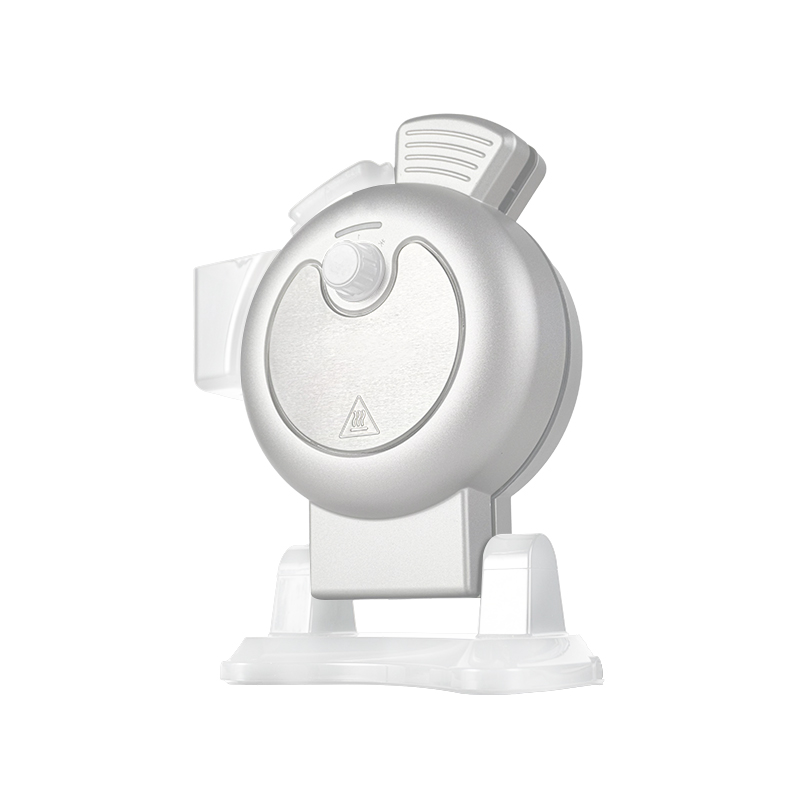 Multi Functional Waffle Maker With Removable Plates1. Fashionable and innovative appearance, vertical and horizontal structure design, diverse functions. 2. 360 ° three-dimensional cyclic heating, uniform heating, no e...View Product →
Removable plate construction changes the maintenance arithmetic in a commercial setting. Instead of retiring an appliance when the coating eventually wears, the operator replaces a single plate and keeps the housing, control board and heating elements in service. For brands supporting hotels or café chains, that distinction reduces both the warranty cost and the volume of returned units.
For Brussels-style Belgian waffles food production, plan on 16 mm to 18 mm. Liège-style products usually sit between 13 mm and 16 mm. Anything under 12 mm is a standard waffle grid and will not produce the characteristic tall pockets or the crisp-to-soft texture contrast buyers associate with Belgian waffles.
A motorised rotating tabletop machine with good heat recovery typically delivers 20 to 24 waffles per hour at a 2.5 to 3 minute cycle. A light fixed-plate machine may deliver only 12 to 15 in the same period. Always base capacity planning on the fourth consecutive waffle rather than the first.
For private label you want a manufacturer, not a wholesaler. The manufacturer controls plate tooling, coating application and thermostat calibration, which are exactly the variables that determine whether your branded product performs consistently. A wholesaler can supply catalogue stock quickly, but cannot usually change plate geometry or coating specification.
Manual flip models are adequate up to roughly 60 waffles per day, especially where staff receive proper training. Above that, the rotating mechanism removes operator timing errors, reduces rejected batches and shortens the learning curve for new staff, which matters in high-turnover hospitality environments.
Requirements vary by market. European markets typically expect CE marking and compliance with the applicable low-voltage and electromagnetic compatibility directives. North American buyers generally require UL or ETL listing, and other regions have their own schemes. Ask for the test reports covering the exact model and voltage variant you are purchasing, not a generic certificate for a similar product.
It can, but not at the same quality level. Liège dough with pearl sugar demands a plate surface that tolerates caramelisation, while Brussels batter demands greater depth and faster heat recovery. If both products are on your menu, two dedicated machines usually deliver better consistency than one compromise unit.
An adapted ODM platform can move from specification to first shipment within a few months. A new OEM mould with custom plate geometry, housing and control panel usually adds several months for tooling, sampling and validation before volume production begins.
At minimum, replacement plates, thermostats, knobs, feet and cords. These cover the large majority of field failures and let a distributor resolve most warranty issues locally instead of shipping units back across borders.
The sequence that works most reliably is this: decide the waffle style first, then set grid depth, plate material and coating, then choose the machine format that matches the expected daily volume, and only then start collecting quotations. Buyers who follow that order typically end up with fewer models, simpler spare parts lists and a lower total cost per waffle served. Buyers who start with price usually discover the grid depth problem after the first container has already landed.
If your programme sits somewhere between an adapted platform and a fully new design, the most useful next step is to send the manufacturer a short brief covering waffle style, expected daily volume, voltage and plug standard, target markets and packaging requirements. That single page of information is usually enough to narrow the field to two or three viable configurations and to produce a realistic quotation with lead times that hold.
Follow our social media to learn more about our updates


+86-13805815092

No. 11 Beihai Road, Xinqi Street, Beilun District, Ningbo City, Zhejiang Province, China
