


 中文简体
 English
 한국어
 日本語
 русский
 Español
 عربى
Industry News
Home / News / Industry News / Best Ground Coffee Guide: How to Match Grind Size to Your Brewing Method
Oct 19, 2026
Content
You bought a bag labeled “best ground coffee,” scooped it into your drip machine, and ended up with a bitter, muddy cup. Or maybe you tried it in a French press and got a weak, watery brew. That frustrating gap between what the package promises and what your brewer delivers usually comes down to one thing: grind size. The best ground coffee for your kitchen is not a universal product. It is the coffee whose particle size matches the extraction method you are using. For a standard drip machine, you want a medium grind. For a pour-over cone, a medium-fine grind works better. For a French press or cold brew, coarse is the way to go. If you are sourcing coffee equipment for a hotel, office, or retail brand, the same logic applies to the machines you choose. At Ningbo Victor Electrical Technology Co., Ltd., we manufacture coffee makers under the Victor Electric Appliance Technology Co., Ltd. name, and we see this mismatch constantly when buyers test samples. The conclusion is simple: start with your brewing method, then choose the grind. Everything else—flavor notes, roast level, origin—comes second.
Ground coffee is not a one-size-fits-all product. The surface area of the coffee particles determines how quickly water extracts soluble solids. Too fine, and you over-extract, pulling out harsh, bitter compounds. Too coarse, and you under-extract, leaving you with a sour, thin cup. The right grind creates a balanced extraction window where sweetness, acidity, and body come together.
Different brewing devices use different mechanisms to move water through the coffee bed. A drip machine relies on gravity and a paper filter. A pour-over cone does the same but with more manual control. An automatic hand-brewed coffee machine tries to replicate the pour-over ritual with consistent temperature and pulse. A French press uses full immersion and a metal mesh filter. Each method changes how long water contacts the grounds and how much pressure is involved. That is why a grind that shines in a drip machine can taste flat in a French press.
For B2B buyers, this matters because your customers will judge your coffee program by the cup they drink, not by the spec sheet. If you supply coffee makers to offices, restaurants, or retail chains, you can reduce complaints by pairing each machine with a recommended grind range. We build our coffee machines with that in mind. For example, our large-capacity drip filter multifunctional coffee machine is designed for medium grind, and its basket geometry helps maintain even extraction across a full pot.
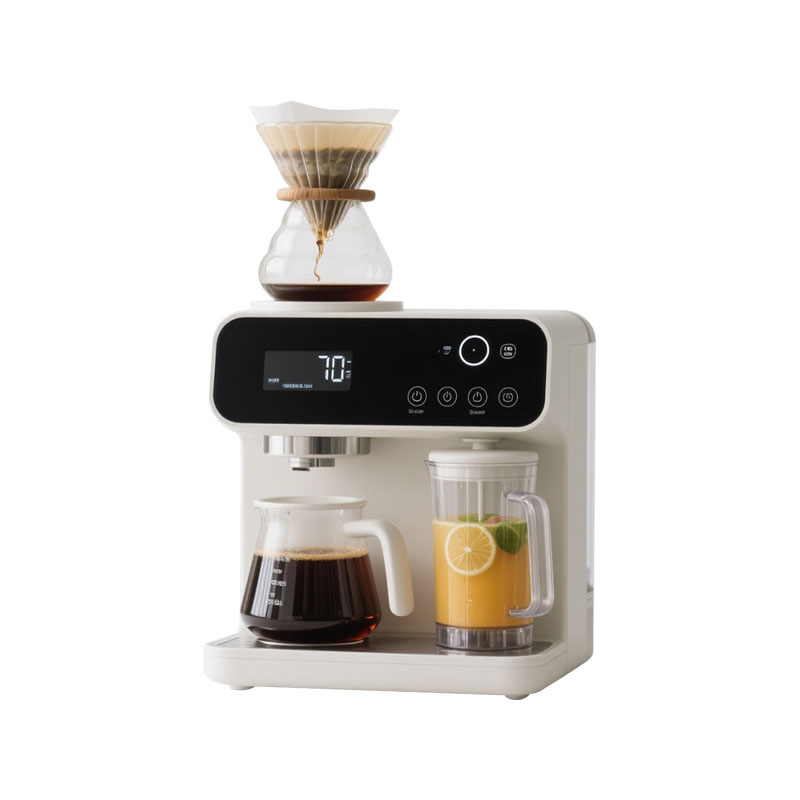 Large Capacity Drip Filter Multifunctional Coffee Machine1. High efficiency and large capacity: 1.8L transparent water tank, can brew 12 cups of coffee at once, commercial-grade flow pump can achieve rapid extraction in 5 mi...View Product →
The table below gives you a practical starting point. Grind size is described by the texture it resembles, not by a number, because grinder settings vary widely between brands. Use this as a guide for your own kitchen or for training your staff on a commercial coffee station.
| Grind Size | Texture | Brewing Method | Typical Extraction Time |
|---|---|---|---|
| Extra Coarse | Like sea salt | Cold brew, French press | 12–24 hours (cold), 4 minutes (press) |
| Coarse | Like kosher salt | French press, percolator | 4–5 minutes |
| Medium | Like sand | Drip machine, flat-bottom pour-over | 4–6 minutes |
| Medium-Fine | Like fine sand | Cone pour-over, automatic hand-brew | 2–4 minutes |
| Fine | Like table salt | Espresso, moka pot | 25–30 seconds |
The chart above is a starting point, not a rule. If your coffee tastes bitter, go coarser. If it tastes sour or weak, go finer. Small adjustments of a few seconds on the grinder can make a noticeable difference.
For our coffee machine series, we often recommend medium to medium-fine for drip and hand-brew models. Our household and commercial automatic hand-brewed coffee machine is calibrated for medium-fine, because its shower head distributes water evenly and mimics a manual pour. If you use pre-ground coffee from a supplier, ask them for a grind specification that matches your machine’s filter basket. Many coffee roasters offer custom grind profiles for B2B clients.
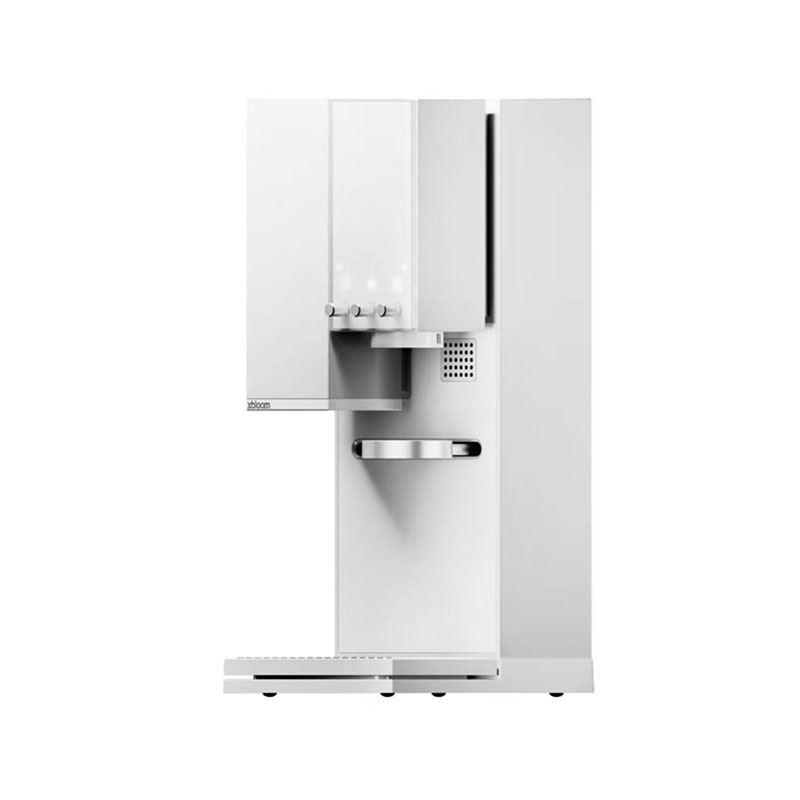 Household and Commercial Automatic Hand Brewed Coffee Machine1. One-click mode, 3-minute brewing. 2. Simple and stylish technology dot matrix display screen. 3. Creative mode, adjustable professional coffee. 4. Free mode, multif...View Product →
Drip machines are the workhorses of homes, offices, and food service. They are forgiving, but they still have preferences. The ideal ground coffee for a drip machine is medium grind, with particles that feel like coarse sand. It should be uniform—if you see a lot of powdery fines mixed with large chunks, your grinder is producing an inconsistent grind, which leads to uneven extraction.
Beyond grind, check the roast date. Ground coffee stales faster than whole bean because of the increased surface area. For the best flavor, use it within two weeks of the roast date. If you are buying in bulk for a commercial setting, look for packaging with a one-way degassing valve. This lets carbon dioxide escape without letting oxygen in. Nitrogen flushing also helps extend shelf life.
Water temperature and brew ratio are the other two levers. Most drip machines brew between 195°F and 205°F (90–96°C). If your machine runs cooler, you may need a slightly finer grind to compensate. The standard ratio is 1 to 2 tablespoons of ground coffee per 6 ounces of water. For a 12-cup pot, that is about 1 cup of grounds. Adjust to taste.
If you are a coffee machine manufacturer, wholesaler, or supplier, you can add value by offering a grind guide with every unit. We include recommended settings in the manuals for our drip filter multifunctional coffee machine. It helps end users get a better cup on the first try, which reduces returns and builds brand loyalty.
 Multi-functional Drip Filter Coffee Machine1. Multi-functional combination, simple and compact. 2.3 adjustable concentration to meet taste changes. 3.24-hour reservation, free time planning. 4. High temperature...View Product →
Manual pour-over gives you complete control over bloom time, pulse pouring, and water temperature. It can produce a spectacular cup, but it also requires attention and practice. Automatic hand-brew machines aim to replicate the same profile with a programmable routine. The best ground coffee for an automatic hand-brew machine is usually medium-fine, because the machine controls the pour rate and agitation more consistently than a human hand.
When you evaluate an automatic brewer, look at the shower head design. A wide, even spray pattern prevents channeling, where water finds a single path through the coffee bed and leaves the rest under-extracted. Look for a machine that pre-infuses the grounds with a small amount of water before the main brew. This “bloom” allows carbon dioxide to escape, so the subsequent water can extract flavor more evenly.
Our household and commercial automatic hand-brewed coffee machine includes a pre-infusion stage and a shower head with multiple outlets. It is designed for coffee shops, offices, and homes that want pour-over quality without the barista. For B2B buyers, this machine can be private-labeled and paired with a custom grind recommendation from your coffee supplier.
One practical tip: if you switch from a manual pour-over to an automatic machine, you may need to adjust your grind slightly coarser. Automatic machines often use a finer mesh filter or a different flow rate, so the same grind can taste different. Start with the manufacturer’s recommendation and fine-tune from there.
For wholesalers and importers, ground coffee is a perishable good. The clock starts ticking as soon as the beans are ground. If you are sourcing ground coffee for resale, insist on roast-to-order or at least a clearly marked roast date. Avoid any package that only shows a “best by” date without a roast date. That is a red flag for old stock.
Packaging matters as much as the coffee itself. The best ground coffee for retail should be sold in bags with a degassing valve and a resealable zipper. For food service, foil-lined bags with nitrogen flush are common. Once opened, transfer the coffee to an airtight container and store it in a cool, dark place. Do not refrigerate or freeze ground coffee unless you plan to use it immediately; moisture and odors can migrate into the grounds.
If you are a coffee machine manufacturer or supplier, you can create a complete solution by bundling a brewer with a coffee subscription or a starter pack of ground coffee. This adds recurring revenue and helps your customers maintain consistency. We see this model work well in office coffee service, where the machine and the coffee are provided together under a service contract.
To learn more about our manufacturing capabilities and how we support ODM/OEM projects, visit our manufacturing page. It covers our quality control systems, automation, and testing procedures.
Even experienced buyers make avoidable mistakes. Here are the most common ones we hear from clients and end users.
If you are a coffee machine supplier, you can turn these mistakes into a selling point. Offer a simple grind guide card in the box, or include a QR code that links to a brewing tutorial. Small touches like this improve the user experience and reduce support calls.
The chart below shows the relative grind size for five common brewing methods, from coarsest to finest. It is a simplified visual guide to help you remember the general progression. Use it as a quick reference when you are setting up a new coffee station or training staff.
The chart is not to scale in terms of microns, but it captures the relative differences. Cold brew and French press need the coarsest grind because they steep for a long time. Drip machines sit in the middle. Pour-over and espresso require finer grinds because the water passes through quickly or under pressure.
For our coffee machine lineup, most drip and combination models perform best with a medium grind. If you are using a machine with a permanent filter, you may want to go slightly coarser to avoid clogging. If you use paper filters, medium is usually safe. Always test with a small batch before committing to a full production run.
We design our brewers with removable filter baskets and easy-to-clean components, so you can experiment with different grind sizes without making a mess. That flexibility is valuable for offices and cafes that switch between coffee brands or roast profiles.
Medium grind is the safest choice for most drip machines. It looks like coarse sand and allows water to flow through at the right rate. If your coffee tastes bitter, go coarser; if it tastes weak, go finer.
You can, but the results are usually poor. Espresso grind is too fine for drip machines, so water struggles to pass through, leading to over-extraction and bitterness. It may also clog the filter and cause overflow.
For peak flavor, use ground coffee within two weeks of the roast date. After that, it begins to lose aromatics and can taste flat or papery. Proper storage in an airtight container slows the decline but does not stop it.
Coarse grind, similar to kosher salt. The French press uses a metal mesh filter, so finer particles can slip through and make the cup muddy. A coarse grind also slows extraction during the 4-minute steep.
Yes. Most manufacturers publish a recommended grind range in the user manual. For our coffee machines, we suggest medium for drip models and medium-fine for automatic hand-brew models. Following these guidelines helps you get consistent results.
Absolutely. Grinding whole beans just before brewing is the best way to maximize freshness. Invest in a burr grinder for the most consistent particle size. Blade grinders tend to produce uneven grounds, which leads to uneven extraction.
Extra coarse grind. Cold brew steeps for 12 to 24 hours, so a coarse grind prevents over-extraction. If the grind is too fine, the cold brew can turn bitter and cloudy.
If you want to explore the technical side of coffee brewing, our industry news article on what is a coffee machine covers the basic mechanics of different brewer types.
The search for the best ground coffee ends when you match it to your brewing equipment. A medium grind for drip, medium-fine for pour-over, coarse for French press, and fine for espresso. That simple framework eliminates most of the guesswork. Once you have the grind right, you can fine-tune roast level, origin, and water quality to suit your taste.
For B2B buyers—importers, wholesalers, and private-label brands—the opportunity is to offer a complete solution. Pair a reliable coffee machine with a clear grind recommendation and a fresh coffee supply. This reduces customer confusion and builds trust. As a coffee machine manufacturer with ODM/OEM experience, we help clients develop brewers that are easy to use, easy to clean, and consistent in performance.
Whether you are equipping an office pantry, opening a cafe, or launching a retail coffee line, remember that the best cup starts with the right grind. Choose your brewer first, then let the grind follow. If you need guidance on machine selection or custom projects, our team is ready to help.
Follow our social media to learn more about our updates


+86-13805815092

No. 11 Beihai Road, Xinqi Street, Beilun District, Ningbo City, Zhejiang Province, China
