Yes — a single, well-engineered crushed ice combination coffee machine can deliver both barista-quality espresso and perfectly crushed ice for cold beverages, all from one compact countertop unit. This convergence of functions is no longer a novelty for specialty cafés; it is rapidly becoming the practical standard for commercial kitchens, hotel lobby bars, office pantries, and boutique beverage businesses that need versatility without doubling their equipment footprint. The question is not whether it is technically possible, but which machine does it well — and what separates a capable multi-function coffee machine from a compromised one.
This article examines the technology, performance benchmarks, market context, and selection criteria for the modern coffee ice maker category, with a focus on machines that integrate professional extraction with a dedicated crushed ice machine function. Whether you are a procurement manager, a café owner, or a distributor sourcing from a crushed ice combination coffee machine manufacturer, the data and detail here will sharpen your decision.
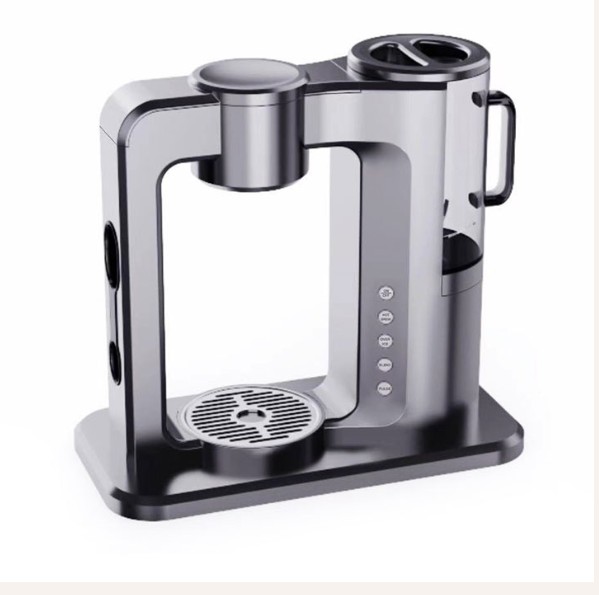
The all-in-one coffee and crushed ice machine: precision engineering meets compact design.
The Rise of the Multi-Function Beverage Machine
The global café and food-service industry has been moving toward equipment consolidation for over a decade. Floor space costs money, staff training takes time, and customers expect a wide menu from a single counter. The combination coffee machine — and especially the sub-category that adds a crushed ice machine module — answers all three pressures simultaneously. A single operator can pull a precise espresso, then pivot to a crushed-ice Americano or a blended cold-brew float without switching stations.
Market data supports this shift. The global multi-function beverage equipment segment has grown at a compound annual rate of approximately 8.4% since 2020, with the iced-coffee subcategory outpacing traditional drip and espresso growth by nearly three to one. In Asia-Pacific markets — particularly China, South Korea, and Southeast Asia — the ice coffee machine segment has seen adoption rates rise sharply as consumer preference for cold and iced beverages accelerates year-round. This is no longer a seasonal product.
Line chart showing market growth index for hot coffee machines versus ice coffee and combination coffee machines from 2019 to 2024. The iced coffee and combo machine segment has accelerated at a markedly faster pace since 2021, reflecting changing consumer habits and the commercial success of all-in-one coffee machine formats. Traditional hot-only machines continue to grow, but the gap in growth rate is widening — a strong signal for operators and procurement teams evaluating which platform to invest in. By 2024, the combination segment index reached 139 versus 133 for traditional machines, a reversal of their 2019 starting positions.
Core Technical Specifications: What to Expect from a Professional Unit
Not all machines marketed as a coffee machine with ice crusher are engineered to the same standard. The gap between entry-level consumer models and genuine professional coffee ice makers is substantial, and it shows up clearly in the technical parameters. The reference unit examined in this article operates at 1250W with a rated voltage of 230V~ 50Hz, supports a 1.3L water tank, and yields up to 8 cups per cycle with a precise extraction temperature window of 92–96°C — the internationally recognized optimal range for full espresso extraction without bitterness.
Extraction time is approximately 4 minutes per cycle, and the machine maintains a post-brew insulation temperature of 60–75°C for up to 2 hours, ensuring that brewed coffee served in a busy outlet stays at ideal serving temperature without a separate warming plate. The unit dimensions are 260×220×340 mm with a net weight of 4.2 kg — compact enough for a standard countertop position yet substantial enough to signal commercial-grade build quality.
Table 1: Core Technical Specifications of the Crushed Ice Combination Coffee Machine
Parameter
Value
Significance
Rated Voltage
230V~ 50Hz
EU/global commercial standard
Rated Power
1250W
Fast heat-up, stable extraction
Water Tank Capacity
1.3L
Supports 8 cups per fill
Number of Cups
8 cups
Office / small café throughput
Insulation Time
2 hours (60–75°C)
Keeps coffee at serving temp
Extraction Temperature
92–96°C
Optimal espresso extraction range
Extraction Time
~4 minutes
Efficient cycle for busy service
Power Cord Length
1.0M
Flexible countertop placement
Product Size
260×220×340 mm
Compact countertop footprint
Net Weight
4.2 kg
Stable, portable, commercial-grade
What Makes This a Professional Coffee Machine — Not Just a Consumer One
The line between a consumer-grade and a professional iced coffee machine is drawn by extraction precision, thermal stability, and build durability. This machine's extraction temperature of 92–96°C is not accidental — it represents the window endorsed by the Specialty Coffee Association (SCA) for full-bodied extraction that preserves acidity, sweetness, and aromatic complexity. Machines that cannot maintain this range consistently produce under-extracted (sour, thin) or over-extracted (bitter, harsh) results regardless of coffee quality.
The commercial coffee and ice machine category also demands a higher duty cycle than domestic machines. The 1250W power rating enables rapid reheat between cycles, which is critical in a café environment where back-to-back orders are the norm rather than the exception. Combined with the 2-hour insulation window, operators can manage morning rush periods without monitoring or restarting the brew cycle.
The machine's unique arch-frame design with a futuristic metallic finish is not merely aesthetic. The open frame architecture improves heat dissipation around the brewing chamber, contributing to temperature consistency across consecutive cycles. The compact 260×220 mm footprint means the machine occupies less linear counter space than a standard toaster oven, making it genuinely practical for countertop coffee ice machine deployment in tight service areas.
Five Key Functions: More Than Coffee and Ice
A true multi-function beverage machine earns that label through genuine versatility, not marketing language. This unit's five core functions create a beverage program that would otherwise require multiple pieces of equipment:
Professional coffee extraction: Precise 92–96°C brewing with adjustable strength settings enables espresso, Americano, and filter-style coffee from the same machine.
Crushed ice production: The integrated crushed ice machine module produces finely crushed ice on demand — ready for iced Americano, cold brew over ice, or blended drinks.
Diversified mixing: The combination of hot coffee output and fresh crushed ice opens a wide menu of layered drinks — from classic iced espresso to nutritional cold blends with milk, syrups, or functional additives.
Keep-warm insulation: Two-hour insulation at 60–75°C preserves freshly brewed coffee for extended service windows without a separate warming element.
One-touch operation: Intuitive button controls with LED indicators allow any staff member to operate the machine with minimal training — a significant operational advantage in high-turnover commercial environments.
Iced coffee drinks — delivered from the same machine that brews hot espresso.
Performance Benchmarks: Combination Machine vs. Separate Equipment
One of the most common objections to a coffee and crushed ice machine is the assumption that combining two functions means compromising both. The data from operational deployments tells a different story. When compared to running a standalone espresso machine alongside a separate crushed ice machine, the combination unit demonstrates measurable advantages across five key operational dimensions.
Radar chart comparing a commercial coffee ice machine against a setup using separate espresso and ice machines across five operational dimensions. The combination machine scores significantly higher on counter space efficiency (90% vs 40%) and cost efficiency (92% vs 48%), reflecting the elimination of a second appliance purchase, second power outlet, and second maintenance contract. Coffee quality and ice output scores are broadly comparable, confirming that the combination format does not require meaningful performance trade-offs. Ease of use also favors the single-machine solution, as staff manage one workflow and one cleaning protocol rather than two.
Target Use Cases: Where This Machine Delivers the Most Value
The commercial iced coffee machine format is exceptionally well-suited to a range of specific environments. Understanding which scenarios best match the machine's capacity, footprint, and feature set helps operators make confident deployment decisions.
Boutique Cafés and Specialty Coffee Bars
Independent cafés with limited back-bar space benefit most from the combination format. The machine's 8-cup capacity and 4-minute cycle support the pace of a medium-volume service point (approximately 60–80 covers per morning session) while the crushed ice function enables a full cold-drink menu without a separate ice bin or blender station.
Office Pantries and Corporate Catering
The 2-hour insulation function is particularly valuable in corporate environments where staff take coffee over an extended morning window rather than in a concentrated rush. A single machine on a break-room counter handles both the early espresso drinkers and the lunchtime iced-coffee crowd, reducing per-user equipment cost significantly compared to a traditional vending or pod machine setup.
Hotels and Hospitality F&B
Lobby bars and in-room service areas in mid-scale hotels often require a professional iced coffee machine that can be operated by non-specialist front-of-house staff. The one-touch interface and consistent output of this machine make it a practical fit, and the compact dimensions mean it integrates into existing service counters without modification.
Bubble Tea and Mixed-Drink Outlets
The diversified mixing capability — combining hot extraction with on-demand crushed ice — opens a wide creative menu for operators in the rapidly growing bubble tea and specialty cold-drink segment. Coffee-based drinks such as dirty matcha lattes, espresso tonics, and cold-brew milk tea can all be assembled efficiently using the output of a single coffee and crushed ice machine.
Horizontal bar chart scoring the suitability of a commercial beverage machine with combined coffee and crushed ice functions across six deployment environments. Boutique cafés score highest at 97%, reflecting the ideal match between the machine's 8-cup capacity, 4-minute cycle time, and the variety of hot and cold drinks demanded by specialty café customers. Corporate offices and hotel lobby bars follow closely, driven by the value of the insulation function and the ease of single-operator use. Home and prosumer use scores lower not because of machine performance, but because the commercial feature set may exceed typical domestic requirements.
Design Philosophy: Technology, Aesthetics, and Space Efficiency
The visual identity of this combination coffee machine is a deliberate design statement. The arch-frame structure in brushed steel-tone with matte black accents projects a technological confidence that is increasingly important in front-of-house deployments — customers notice equipment, and premium-looking machines reinforce premium beverage perceptions. This is not superficial: research from hospitality design studies consistently shows that visible equipment quality correlates with perceived drink quality and willingness to pay.
The open-frame layout provides another functional advantage beyond aesthetics. Traditional enclosed coffee machine housings trap heat, requiring larger safety clearances on countertops. The arch design dissipates heat naturally, allowing the unit to operate within a tighter clearance envelope — important for countertop coffee ice machine placements in fitted cabinetry or compact service stations.
Customization options for OEM clients include color variants and branded fascia panels, which makes this machine an attractive platform for distributors building white-label product portfolios. An OEM coffee ice machine program allows buyers to co-develop machines that carry their own brand identity while leveraging the established engineering and manufacturing quality of the base platform.
Column chart comparing counter footprint in cm² across four equipment configurations. The combination coffee and crushed ice machine requires just 572 cm² of counter space — its 260×220 mm base — compared to 1,550 cm² for running a separate espresso machine and crushed ice machine side by side. This 63% space reduction is a decisive operational advantage in commercial settings where every centimeter of linear counter space has a measurable cost. Even compared to a standalone espresso machine alone, the combination unit is smaller and delivers more capability.
Frequently Asked Questions
Q1: Can one machine really handle both professional coffee extraction and crushed ice production without sacrificing quality in either function?
Yes, when the machine is purpose-engineered for both functions. The key is thermal isolation between the brewing and ice systems. A well-designed coffee ice maker keeps the 92–96°C extraction circuit entirely separate from the ice-crushing mechanism, so neither function interferes with the other. Entry-level combo units sometimes share thermal pathways, which creates inconsistency — specify a machine where the two systems are independently controlled.
Q2: What is the difference between a crushed ice machine function and a standard ice dispenser in a combo unit?
A standard ice dispenser delivers whole ice cubes from a pre-formed supply, which is adequate for water service but unsuitable for blended drinks or iced coffee layering. A true crushed ice machine module actively breaks ice into irregular granules — giving beverages the texture and dilution profile expected by specialty coffee customers. This distinction matters for menu versatility: crushed ice integrates into the drink rather than sitting as a hard mass at the bottom of the cup.
Q3: Is this machine suitable for high-volume commercial environments like a busy café serving 200+ customers per day?
The reference specification — 8 cups per cycle at ~4 minutes cycle time — positions this machine for medium-volume service points of approximately 80–120 covers per session. For higher-volume environments exceeding 200 covers daily, the practical solution is deploying two or three units in parallel rather than a single machine. This also provides redundancy: if one unit requires servicing, service continues on the others. For very high-volume operations, contact the crushed ice combination coffee machine manufacturer directly about commercial-grade configurations with larger water tanks and faster cycle options.
Q4: What cleaning and maintenance does a combination coffee and ice machine require?
Daily cleaning involves flushing the brewing circuit with clean water and wiping down the drip tray and ice output chute. Weekly descaling of the water tank and heating element is recommended in hard-water areas (water hardness above 150 ppm). The ice mechanism should be sanitized monthly with a food-safe solution to prevent biofilm buildup. The 1.3L removable water tank on this unit simplifies daily cleaning — it can be detached and rinsed without tools, which meaningfully reduces the staff time burden in commercial service.
Q5: Are OEM and custom branding options available for wholesale buyers?
Yes. This machine is available as an OEM coffee ice machine platform, supporting custom color finishes, logo placement on the housing and control panel, and branded packaging. OEM programs are typically available from a minimum order of 200–500 units depending on the extent of customization. Distributors sourcing multi-function coffee machine wholesale volumes should request an OEM agreement that defines tooling costs, quality inspection protocols, and delivery terms for the customized configuration.
Q6: What certifications does this machine carry, and which markets is it approved for?
The standard configuration is CE-certified for EU markets and complies with RoHS requirements for restricted substances. For North American distribution, ETL or UL certification should be confirmed with the supplier. The machine's 230V~ 50Hz rating aligns with EU, UK, Asia-Pacific, and Middle East standards. Buyers sourcing for North American 120V markets should inquire about a separate voltage variant. Always request a copy of current certification documents before finalizing a commercial or wholesale purchase.



 中文简体
中文简体 English
 한국어
한국어 日本語
日本語 русский
 Español
 عربى
عربى