The Primary Function of a Steamer Pot
The primary function of a steamer pot is to cook food using indirect, circulating steam heat. Unlike boiling or frying, which submerge food in liquid or oil, a steamer pot suspends food above boiling water. This allows the food to cook gently and evenly through convection, preserving its natural texture, flavor, and up to 50% more water-soluble vitamins (like Vitamin C and B complex) compared to boiling.
In essence, it is a tool designed to harness the power of vaporized water to achieve a healthy, pure, and often faster cooking result without the need for added fats or oils.
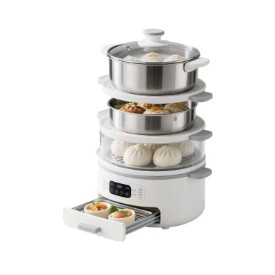
How a Steamer Pot Works: The Science of Vapor
A standard steamer pot consists of two or three components: a deep base pot for holding water, a perforated insert or basket (often with a lid), and sometimes stacking tiers. The mechanism is simple yet scientifically effective.
The Convection Process
When water in the base reaches 212°F (100°C), it transforms into steam. The lid traps this steam, creating a pressurized, humid environment. As steam circulates, it transfers latent heat to the food’s surface. Because steam carries significantly more heat energy than air (a phenomenon known as enthalpy of vaporization), it cooks food rapidly while preventing the loss of moisture from the food itself.
The Nutritional Advantages Over Other Cooking Methods
One of the most compelling reasons to use a steamer pot is its superior nutritional retention. Data from food science studies consistently show that steaming is the gold standard for preserving nutrients.
Comparative nutrient retention in broccoli using different cooking methods (based on USDA data).
| Cooking Method |
Vitamin C Retention |
Glucosinolate Retention (Antioxidants) |
| Steaming (Steamer Pot) |
~90% |
~85-90% |
| Boiling |
~30-40% |
~40-50% |
| Microwaving |
~60-70% |
~70-75% |
As the data shows, the steamer pot excels at preventing water-soluble nutrients from leaching into cooking water. This makes it the ideal choice for health-conscious individuals and those managing dietary restrictions.
Practical Applications: What Can You Cook in a Steamer Pot?
Contrary to popular belief, a steamer pot is not limited to just vegetables. Its versatility extends to proteins, grains, and even desserts. Here are some practical applications with specific timing examples:
- Seafood: Whole fish (e.g., sea bass) cooks perfectly in 8-12 minutes, resulting in flaky, moist flesh that doesn't fall apart.
- Dumplings & Buns: Frozen potstickers or homemade bao buns require 10-15 minutes to achieve a soft, pillowy texture without becoming soggy.
- Whole Grains: Steaming rice in a lined basket rather than boiling can yield a fluffier result with a 15% reduction in glycemic index due to the removal of excess starch.
- Eggs: Steamed hard-boiled eggs (in the shell) for 12-14 minutes result in shells that peel off significantly easier than traditional boiling.
Frequently Asked Questions (FAQ) About Steamer Pots
1. Does steaming remove nutrients?
No. In fact, it is the cooking method that best preserves nutrients. Studies indicate that steaming retains nearly 100% of beta-carotene and significantly more flavonoids than raw or boiled vegetables. The key is to avoid over-steaming; 3-5 minutes is usually sufficient for leafy greens.
2. Can I steam without a specialized steamer pot?
Yes. A DIY method involves placing a heat-proof colander inside a large pot with a tight-fitting lid. The principle remains the same: ensure the water level is 1-2 inches below the colander to prevent boiling (which simmers the food) rather than steaming.
3. Is a steamer pot faster than boiling?
Generally, yes. Because steam transfers heat more efficiently than water (steam releases 2,257 joules/gram of latent heat upon condensation compared to water's 4.18 joules/gram/°C), it often reduces cooking time by 20-30% for dense vegetables like carrots or potatoes.
4. How do I prevent soggy results?
Sogginess usually occurs from condensation buildup. To prevent this, wrap the lid in a clean kitchen towel to absorb excess moisture, or slightly crack the lid during the final minute of cooking to allow steam to escape, ensuring the food remains firm and vibrant.
Choosing the Right Steamer Pot: Material Matters
The material of your steamer pot affects heat distribution, durability, and maintenance. Below is a quick guide to help you decide based on your cooking habits.
- Stainless Steel: Highly durable, dishwasher safe, and non-reactive. Ideal for high-heat steaming and searing proteins before steaming. However, it requires careful monitoring to prevent sticking if not using a non-stick basket.
- Bamboo: Traditional material that absorbs excess condensation, preventing soggy dumplings. It adds a subtle earthy aroma but requires hand-washing and thorough drying to prevent mold. Best for multi-tiered dim sum cooking.
- Silicone: Collapsible for easy storage, non-stick, and dishwasher safe. It is heat-resistant up to 428°F (220°C). Ideal for occasional users with limited kitchen space, though it may lack the stability for heavy roasts.
For consistent results, stainless steel with a encapsulated aluminum base offers the best balance of heat conductivity and longevity, ensuring the water boils rapidly and evenly across the surface.



 中文简体
中文简体 English
 한국어
한국어 日本語
日本語 русский
 Español
 عربى
عربى